The Ultimate Guide to Hiring a Polyurethane Spray Foam Roofing Contractor for Commercial Properties
Let’s be honest — your roof is probably the last thing you think about until it’s absolutely the first thing you think about. A leak shows up on a Tuesday morning, your warehouse floor looks like a swimming pool, and suddenly you’re canceling meetings to deal with a problem that could’ve been prevented years ago.
Here’s the good news: if you’ve got a flat or low-slope commercial roof (and most Southern California facilities do), there’s a roofing solution that’s been quietly revolutionizing the industry — and it literally gets sprayed on. We’re talking about polyurethane spray foam roofing, and if you haven’t looked into it yet, this guide is going to be a game-changer for you.
We’re Applied Roofing Services, and we’ve been helping commercial property owners, facility managers, and industrial real estate investors across Southern California protect their buildings since 2003. So yeah — we know a thing or two about this stuff.
What Is Polyurethane Spray Foam — And Why Is Everyone in Commercial Roofing Talking About It?
Let’s start from scratch, because “polyurethane spray foam roofing” sounds like something a chemist invented to confuse facility managers. It’s actually pretty simple once you break it down.
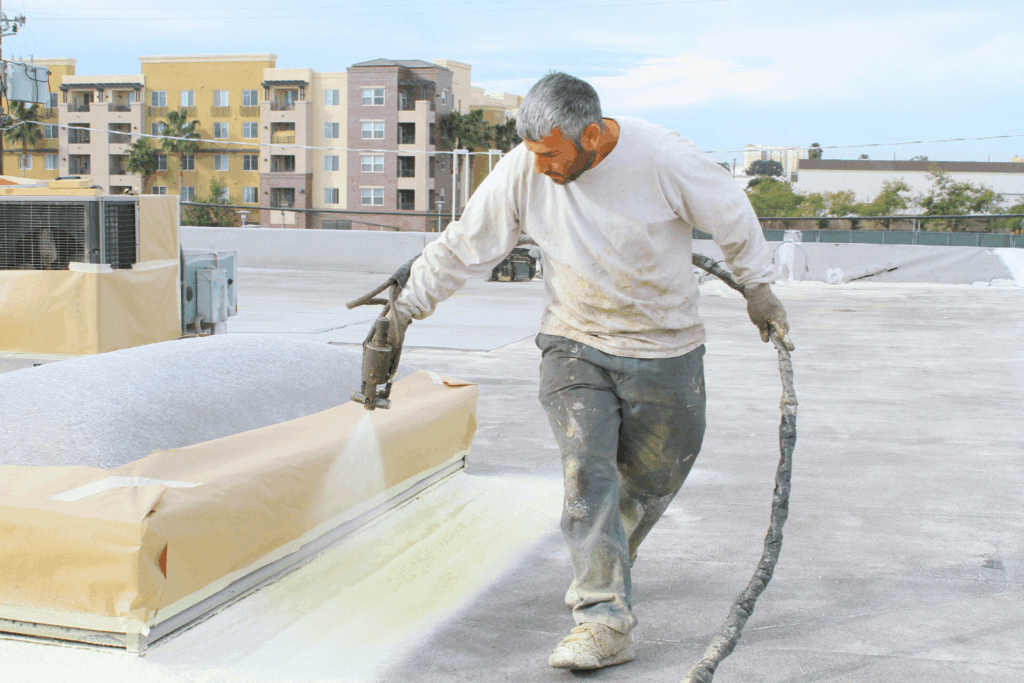
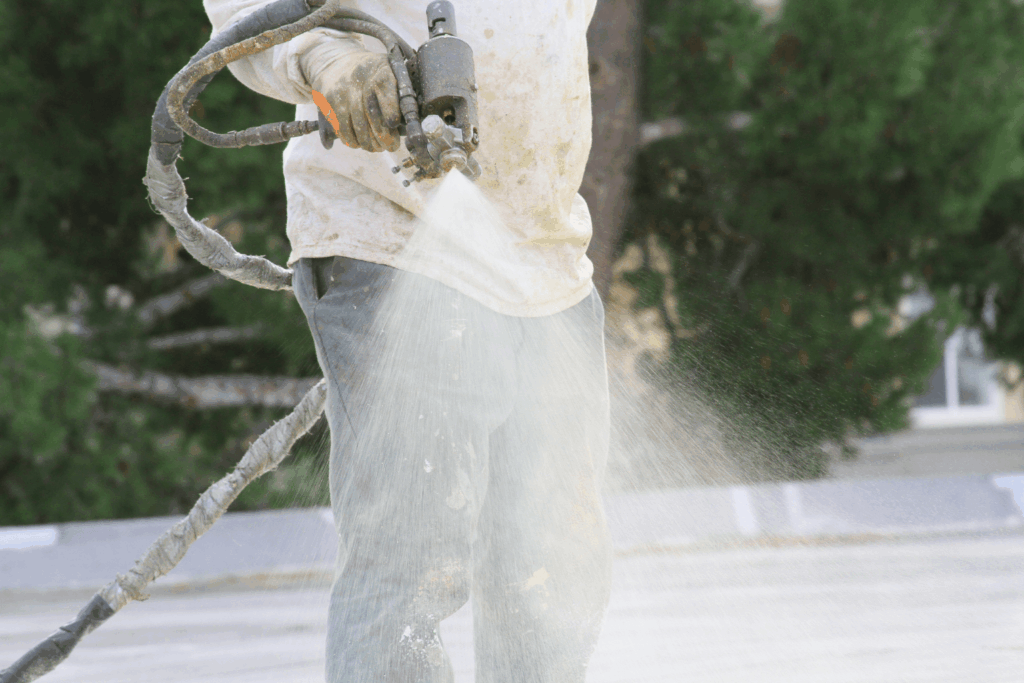
Spray polyurethane foam — SPF for short — is a two-component liquid material. You’ve got Component A (isocyanate) and Component B (polyol resin). They’re kept separate right up until the moment they’re sprayed through a specialized heated hose and mixing gun onto your roof surface. The second those two liquids hit each other and land on your roof? Chemistry happens. Fast.
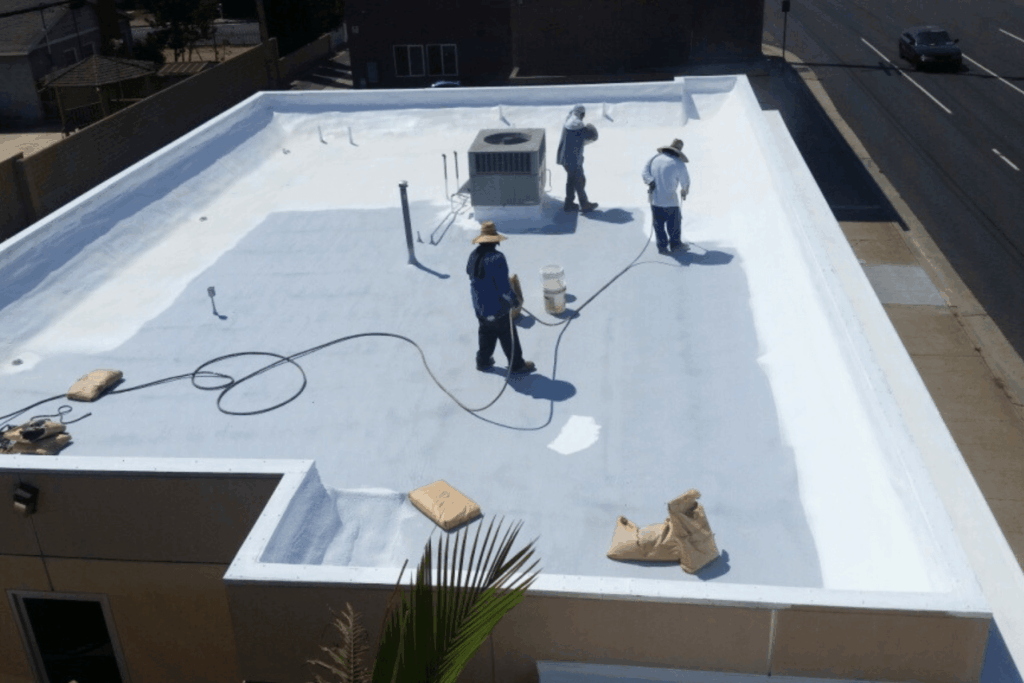
The mixture expands 30 to 60 times its original volume within seconds, filling every crack, seam, and irregular surface it touches. It then hardens into a rigid, closed-cell foam layer that’s seamless, fully adhered, and tough as nails. A protective elastomeric coating — usually silicone or acrylic — goes on top to shield the foam from UV rays and the elements.
That’s it. That’s your new roof. Pretty wild when you think about it.
The Benefits? Oh, There Are Quite a Few.
It’s basically one giant, leak-proof blanket for your building.
Traditional roofing systems have seams, laps, fasteners, and flashings — and every single one of those is a potential failure point. SPF has none of that. Because it’s sprayed on as a liquid and expands into a continuous layer, there are zero seams. No seams means no entry points for water. It’s genuinely that straightforward.
The insulation value is off the charts.
Closed-cell SPF delivers an R-value of R-6 to R-7 per inch — the highest of any commercial roofing insulation available today. A standard 3-inch application gives you R-18 to R-21 of continuous insulation with no thermal bridges. For context, most traditional board insulation systems hover around R-2 to R-3 — and that’s before accounting for the heat that sneaks through gaps and fasteners. Your HVAC system will thank you in a language it speaks fluently: lower utility bills.

It goes right over your existing roof.
This one surprises a lot of people. You don’t have to tear off your old torch down, hot mop, single-ply, or gravel rock roof before applying SPF. The foam bonds directly to most existing commercial roofing substrates after proper prep. That means no dumpsters parked outside your facility, no massive tear-off labor costs, and no landfill fees. In 2026, with California tightening environmental regulations around construction waste, this is a genuinely big deal — both for your wallet and your sustainability goals.
It’s virtually maintenance-free.
Most commercial roofs need regular inspections, seam repairs, and patching to stay watertight. SPF? Not so much. Because the system is seamless and self-flashing — meaning it wraps right around HVAC curbs, drains, and roof penetrations like a second skin — the usual suspects for leaks are just… gone. The only real maintenance item is recoating the protective topcoat every 10 to 15 years, which costs a fraction of a full replacement and essentially resets the clock on your roof’s lifespan.
It lasts an incredibly long time.
We’re talking 30 to 50 years or more with proper care. That’s not a marketing stretch — that’s the documented performance history of well-maintained SPF systems. When you factor in the low maintenance costs and the energy savings stacking up year after year, the total cost of ownership makes a compelling case all on its own.
It actually makes your building stronger.
Here’s a fun one most people don’t know: closed-cell SPF adds measurable structural rigidity to your roof deck. Once it cures and bonds to the substrate, it increases the roof’s resistance to wind uplift — which matters a lot in Southern California where Santa Ana wind events can get seriously nasty. You’re not just getting a waterproof layer; you’re getting one that helps hold things together.
It plays nicely with California’s energy codes.
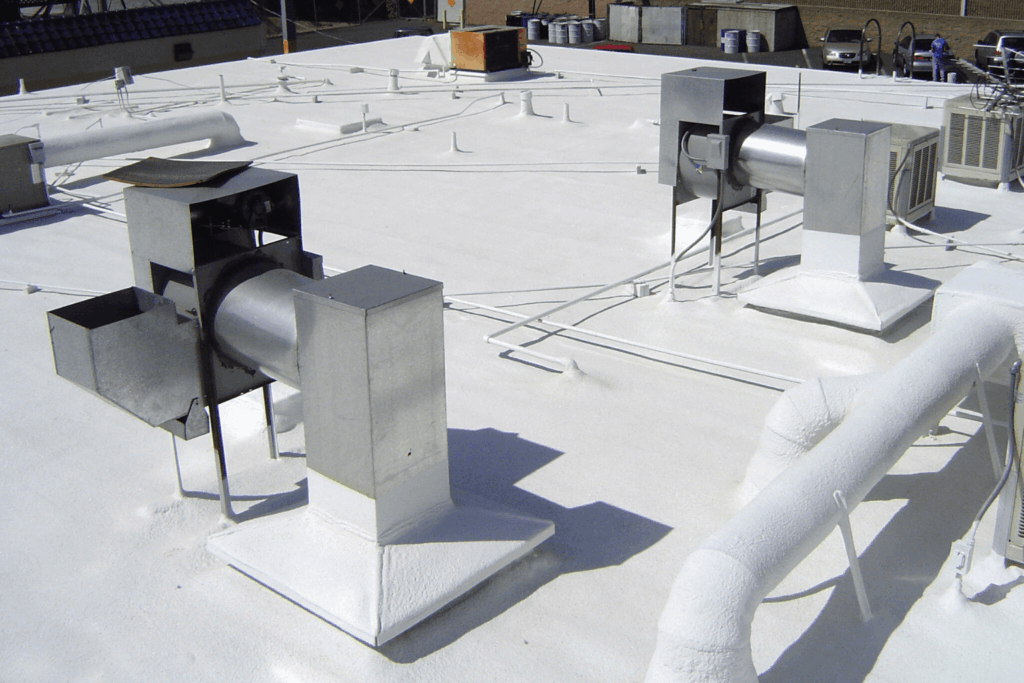
When you pair SPF with a hyper-reflective silicone topcoat — which is standard practice in 2026 — you’ve got a cool roof system that reflects solar energy instead of absorbing it. Roof surface temperatures can drop by 50°F or more compared to a traditional dark roof. That translates directly into lower AC loads, better Title 24 compliance, and a noticeably more comfortable building interior. Win, win, and win.
Bottom line? Polyurethane spray foam roofing isn’t just another material option — it’s a genuinely smarter way to think about your commercial roof as a long-term asset rather than a recurring expense. And when it’s installed by an experienced polyurethane spray foam roofing contractor like Applied Roofing Services, you’re getting a custom-fit system built specifically for your building, your climate, and your bottom line.
Why Your Facility Needs a Specialized Polyurethane Spray Foam Roofing Contractor
Here’s a fun fact to kick things off: spray polyurethane foam expands 30 to 60 times its liquid volume after application. That’s not a typo. The stuff you spray on is a fraction of what you end up with — a dense, seamless, fully adhered insulation and waterproofing layer all in one shot.
Pretty cool, right? But here’s the catch — that chemistry is exact. SPF application isn’t like rolling out a membrane or torching down modified bitumen. It requires precisely calibrated equipment, the right ambient temperature and humidity conditions, trained technicians who understand mixing ratios, and a methodical approach to coverage thickness. Get any of that wrong, and you’ve got a roof that bubbles, delaminates, or worse.
That’s why hiring a specialized polyurethane spray foam roofing contractor — not just any roofer with a foam rig — matters enormously. The difference between a properly installed SPF system and a botched one is measured in decades of performance (or the lack thereof).
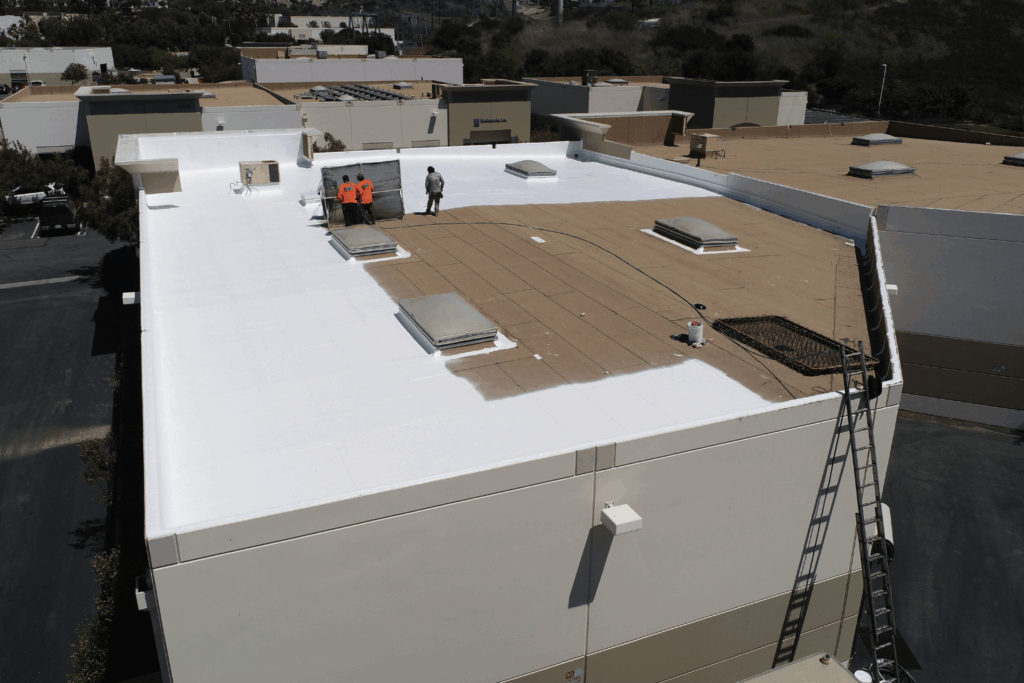
At Applied Roofing Services, our crews are trained specifically in SPF systems. We understand the science behind closed-cell foam chemistry, thermal bridging, and how Southern California’s heat, UV intensity, and increasingly wild weather patterns affect roofing materials over time. This isn’t a side service for us — it’s one of our core specialties.
A standard roofer applying SPF without the right expertise is like asking a general contractor to rewire your electrical panel. Technically possible. Not advisable.
2026 Trends in Commercial Roofing: Efficiency and Climate Resilience
The commercial roofing world is moving fast right now, and 2026 is shaping up to be a pivotal year — especially here in Southern California. Here’s what’s dominating the conversation:
Hyper-Reflective “Cool Roof” Coatings Are Now the Standard
California’s Title 24 energy code has been getting stricter every cycle, and 2026 is no exception. The state basically mandates that commercial roofs reflect solar energy rather than absorb it — and for good reason. Studies show that cool roofs can reduce rooftop surface temperatures by up to 50–60°F compared to traditional dark roofing materials. That translates directly into lower AC loads, reduced energy bills, and a smaller carbon footprint.
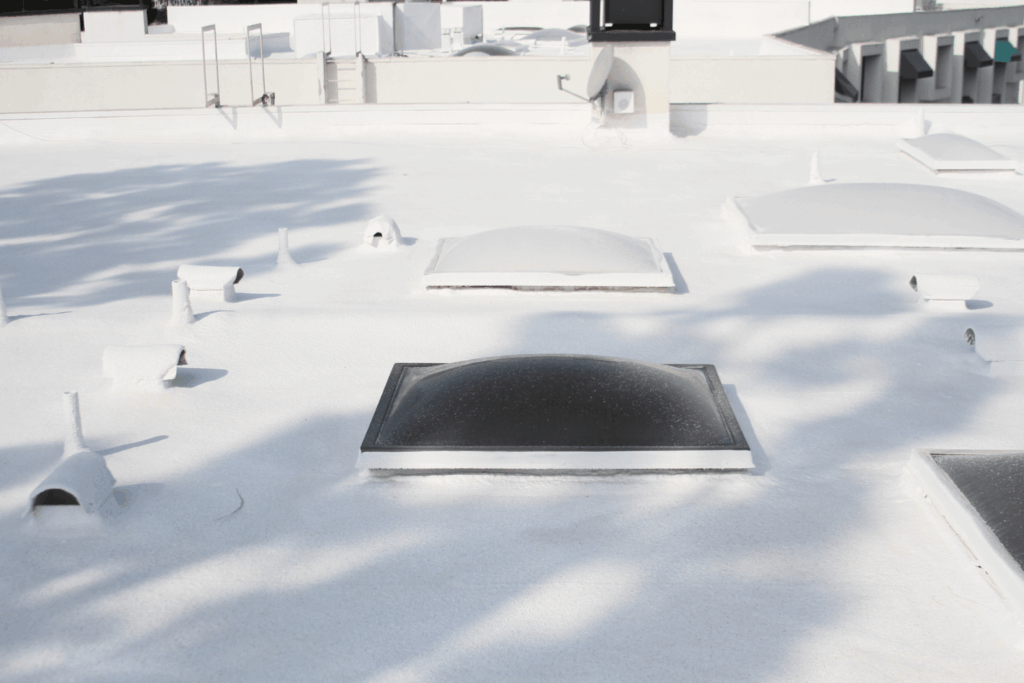
When a polyurethane spray foam roofing contractor installs an SPF system today, it’s almost always finished with a hyper-reflective silicone or acrylic topcoat. This isn’t optional fluff — it’s the layer that protects the foam from UV degradation and bounces solar heat right back into the atmosphere. Two jobs, one coating. Smart engineering.
Zero-Waste Roofing Is a 2026 Sustainability Priority
Here’s something most building owners don’t know: commercial roof tear-offs send an estimated 12 million tons of roofing material to U.S. landfills every year. Environmental regulators in California are increasingly scrutinizing this, and commercial property owners are feeling the pressure to adopt more sustainable practices.
This is where SPF absolutely shines. Because foam can be sprayed directly over most existing roofing systems, there’s no tear-off required. No dumpsters. No landfill fees. No disruption to your operations. For sustainability-minded facility managers (and those trying to hit ESG targets), this is a massive win in 2026.
Climate-Resilient Closed-Cell Tech Is Built for Atmospheric Rivers
Remember those atmospheric river events that hammered California over the past few winters? They’re not going away. High-density, closed-cell polyurethane foam is having a serious moment right now because its structure is basically impervious to water infiltration — even under ponding conditions. That’s become a critical feature as extreme precipitation events become more frequent and more intense across the region.
Seamless Integration: Applying SPF Over Torch Down, Single-Ply, and Hot Mop Roofs
Okay, this is the part where most facility managers do a double-take — so let’s slow down and really appreciate this.
Traditional roofing replacements are expensive, disruptive, and wasteful. When your TPO membrane or torch-down system reaches the end of its life, the conventional answer is: tear it all off, haul it away, and start fresh. That process can cost tens of thousands of dollars in labor and disposal alone — before you’ve even bought new materials.
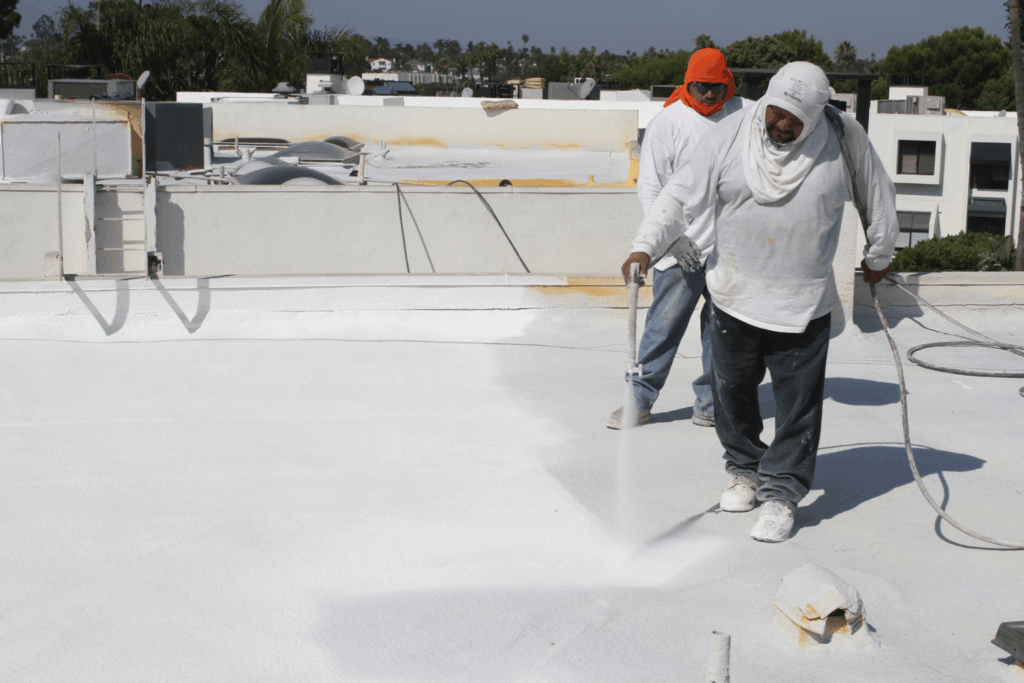
A qualified polyurethane spray foam roofing contractor can change that math entirely.
SPF is chemically engineered to adhere to and bond with virtually every existing commercial roofing substrate, including:
- Torch down / modified bitumen — SPF bonds directly to the surface, adding insulation value on top of existing waterproofing
- Hot mop / built-up roofing (BUR) — Even gravel-surfaced built-up roofs can receive SPF after proper prep and blowing off loose aggregate
- Single-ply membranes (TPO, EPDM, PVC) — SPF adheres well to cleaned and primed single-ply systems
- Gravel rock roofs — After removing excess gravel and prepping the surface, SPF creates a seamless new system right over the existing base
This compatibility is one of the biggest financial advantages of working with us at Applied Roofing Services. We assess your existing roof’s condition, determine the right preparation process, and apply a custom-fit SPF system that essentially gives your building a brand-new roof without the brand-new-roof price tag.
Fun fact: because SPF self-flashes around penetrations like HVAC curbs, drains, and skylights, you’re also eliminating the most common leak points in one step. Those little spots where traditional roofing always seems to fail first? Foam just… fills them.
The True ROI of Spray Foam: Slashing Energy Costs and Eliminating Leaks
Let’s talk numbers, because this is what B2B decisions are really made of.
SPF has the highest R-value per inch of any commercially available roofing insulation — typically R-6 to R-7 per inch for closed-cell foam. A 3-inch application gives you R-18 to R-21 of continuous, unbroken insulation right across your entire roof deck. Compare that to the thermal bridging and gaps inherent in traditional board insulation systems, and you start to see why energy engineers love this stuff.
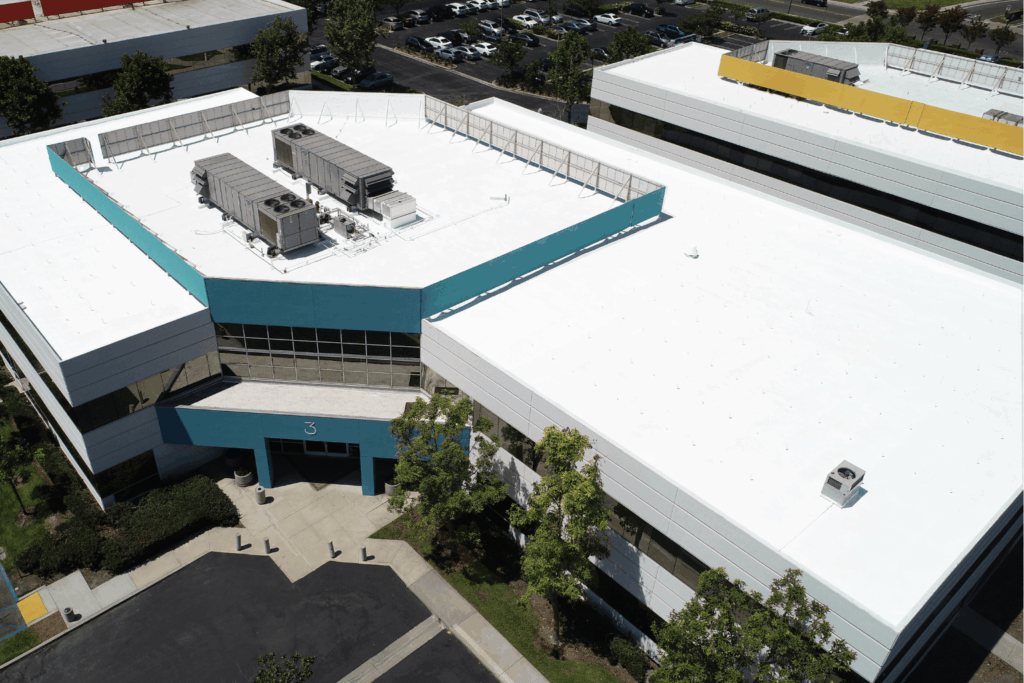
Here are 5 concrete ways an SPF roof protects your commercial investment:
- Slashes HVAC costs — Continuous insulation with no thermal bridges means your HVAC system doesn’t have to compensate for heat bleeding through gaps and seams. Building owners consistently report 20–30% reductions in cooling costs post-installation.
- Eliminates leak liability — Because SPF is fully adhered and seamless, there are literally no seams or laps to fail. No seams = no leaks. It’s almost annoyingly logical.
- Adds structural load resistance — Closed-cell SPF actually adds rigidity to your roof deck. It bonds to the substrate and increases the roof’s ability to resist uplift forces during high winds — increasingly important as Santa Ana wind events intensify.
- Extends roof lifespan dramatically — A properly maintained SPF system lasts 30 to 50 years or more. The only ongoing requirement is recoating the protective topcoat every 10–15 years — a fraction of the cost of a full replacement.
Increases property value — A building with a documented, high-performance roofing system commands better lease rates and higher sale prices. Institutional buyers and sophisticated tenants notice this stuff.
Comparing Commercial Roofs: SPF vs. Traditional Systems
Not sure how SPF stacks up against what you might already be familiar with? Here’s an honest, side-by-side breakdown:
| Factor | Spray Polyurethane Foam (SPF) | TPO / EPDM (Single-Ply) | Built-Up Roofing (BUR / Hot Mop) |
|---|---|---|---|
| Upfront Cost | $4.00–$7.00/sq ft | $3.50–$7.00/sq ft | $3.00–$6.50/sq ft |
| Lifespan | 30–50+ years (with recoating) | 15–25 years | 15–30 years |
| R-Value | R-6 to R-7 per inch (highest available) | R-2 to R-3 (membrane only) | R-1 to R-2 |
| Maintenance | Virtually none (recoat every 10–15 yrs) | Moderate (seam inspection, patching) | High (regular inspection, gravel maintenance) |
| Tear-Off Required? | No — applies over existing systems | Usually yes at replacement | Usually yes at replacement |
| Leak Risk | Extremely low (seamless) | Moderate (seam failure common) | Moderate to High (multiple plies/seams) |
| Sustainability | High (no tear-off waste, energy savings) | Moderate | Low |
| Best For | Long-term ownership, high energy costs | Short-term budgets, new construction | Legacy systems, budget-constrained projects |
The numbers don’t lie — when you’re thinking in terms of total cost of ownership rather than just upfront spend, SPF wins the long game pretty convincingly.
Choosing Applied Roofing Services: Southern California's Trusted Experts Since 2003
We’re going to be straightforward with you: there are a lot of contractors out there who will tell you they do spray foam roofing. Not all of them specialize in it, and not all of them have been doing it long enough to have seen how their systems perform over time.
We have.
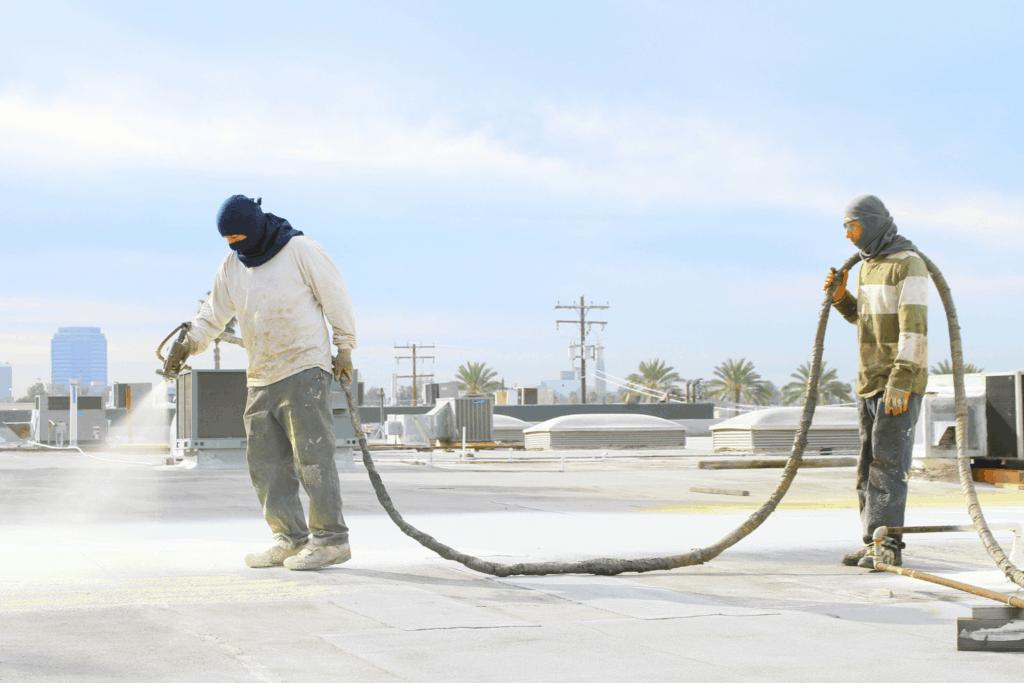
Applied Roofing Services has been operating as a dedicated commercial polyurethane spray foam roofing contractor in Southern California since 2003. That’s over two decades of installations, re-coatings, and long-term relationships with facility managers who trust us to protect their buildings year after year.
Here’s what makes our approach different:
Custom-fit systems, not cookie-cutter quotes. Every building has different insulation needs, drainage patterns, penetration layouts, and existing roof conditions. We don’t show up with a one-size-fits-all proposal. We assess your specific facility and design an SPF system built around your operational needs, your budget, and your long-term goals.
Minimal operational disruption. SPF application is fast and quiet compared to traditional roofing. There’s no hot kettles, no noisy tear-off equipment, and no major debris. Your facility stays open, your team keeps working, and we get the job done efficiently.
Long-term relationships over one-time transactions. We’re not interested in installing a roof and disappearing. We offer maintenance programs, periodic recoating services, and ongoing support — because we want your roof to last as long as you own the building.
Ready to Talk About Your Roof?
If you’ve made it this far, you’re clearly serious about making the right decision for your facility — and that’s exactly the kind of client we love working with.
Whether you’re dealing with a roof that’s aging out, tired of chasing leaks, trying to hit energy efficiency targets, or just want to understand your options before making a big capital decision, we’re here to walk you through it with zero pressure and a lot of expertise.
Applied Roofing Services has been Southern California’s trusted polyurethane spray foam roofing contractor since 2003. We protect commercial buildings, industrial facilities, and investment properties with custom-fit SPF systems designed to last — and to let you get back to running your business.
👉 Visit us at appliedroofingservices.com to request a consultation or get a free assessment of your existing roof.
Your roof’s best years might still be ahead of it. Let’s find out together.
Frequently Asked Questions
What does a polyurethane spray foam roofing contractor do?
A polyurethane spray foam roofing contractor specializes in applying a continuous, seamless layer of closed-cell foam insulation and a protective elastomeric coating to commercial and industrial flat roofs.
How long does a commercial polyurethane spray foam roof last?
A commercial polyurethane spray foam (SPF) roof can last 30 to 50 years or more, provided the protective top coating is properly maintained and re-applied every 10 to 15 years.
Can spray foam roofing be applied over an existing commercial roof?
Yes, polyurethane spray foam is highly compatible and can be sprayed directly over existing commercial roofing systems, including torch down, hot mop, single-ply, and gravel rock, eliminating the need for a costly tear-off.
Is polyurethane spray foam roofing energy efficient?
Yes, polyurethane spray foam is one of the most energy-efficient commercial roofing materials available. It provides the highest R-value per inch of any roofing insulation, significantly reducing a building’s heating and cooling costs.
Does a spray foam roof require a lot of maintenance?
No, polyurethane spray foam roofs are virtually maintenance-free. Because the material expands to form a single, seamless, self-flashing layer, it eliminates the seams and joints where traditional roofs typically leak.
How much does spray foam roofing cost for a commercial building?
The cost of commercial spray foam roofing typically ranges from $4.00 to $7.00 per square foot, depending on the thickness of the foam, the type of top coating used, and the condition of the existing roof substrate.
Is spray polyurethane foam waterproof?
Yes, closed-cell spray polyurethane foam is 100% waterproof. Its dense cellular structure prevents water infiltration, making it an ideal solution for flat commercial roofs prone to ponding water.
What areas does Applied Roofing Services cover?
Applied Roofing Services has been a leading commercial roofing contractor providing high-quality, durable roofing solutions across the Southern California region since 2003.