Environmentally Friendly Roofing for Commercial Properties in Los Angeles & Orange County
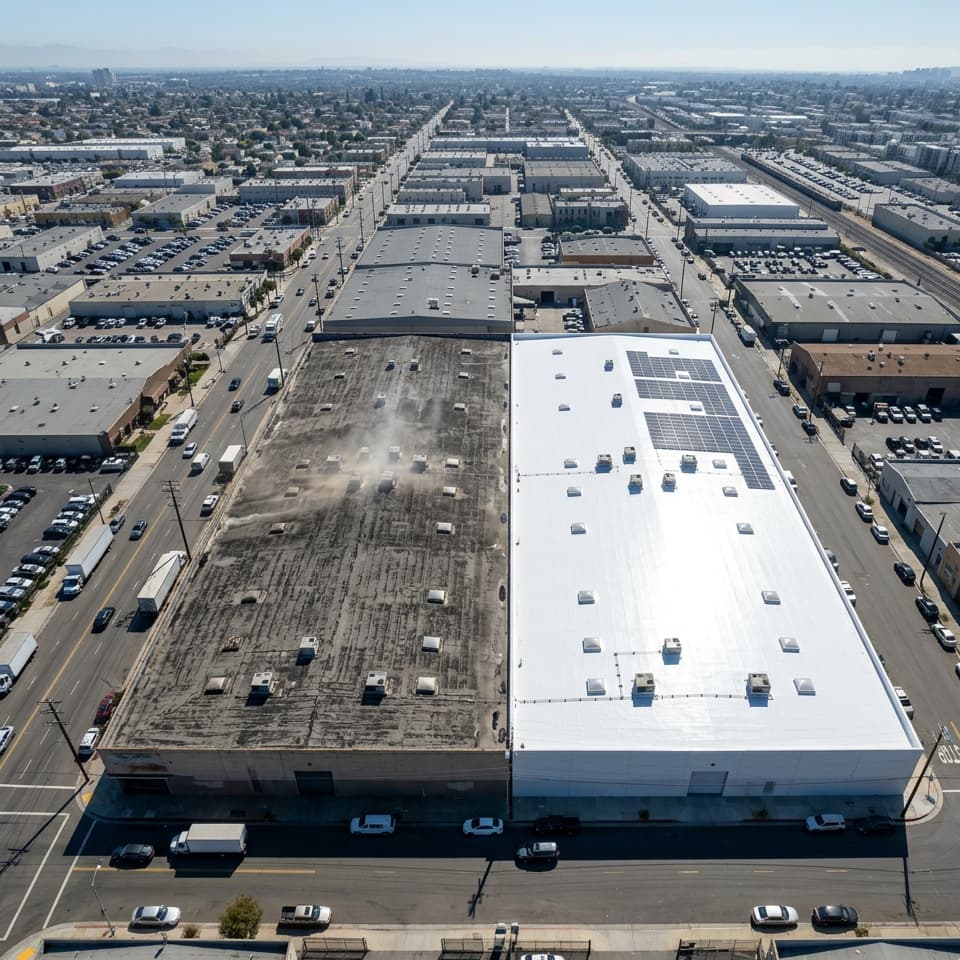
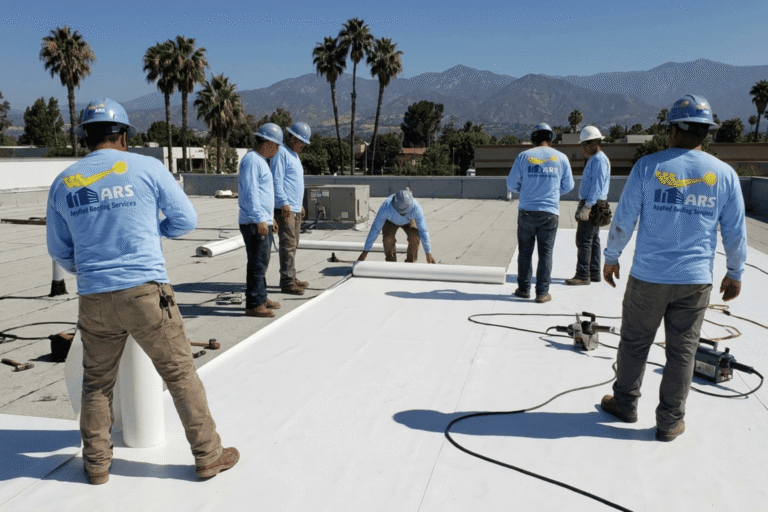
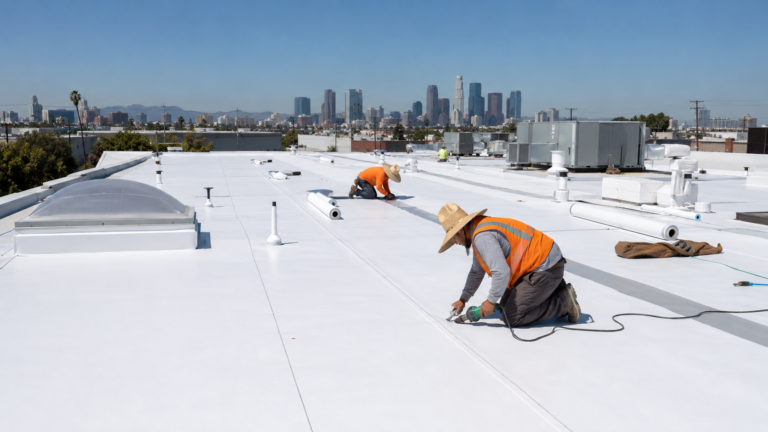
Your roof is one of the most powerful tools you have for reducing your building’s environmental footprint — and your energy bills. Applied Roofing Services has been installing high-performance, environmentally friendly roofing systems across Southern California since 2003. From cool roofs and spray polyurethane foam to silicone coatings and single-ply membranes, we help commercial property owners make smart, sustainable choices that protect their investment, lower operating costs, and meet California’s strict environmental standards.
If you own or manage a commercial building in Los Angeles County, Orange County, or the Inland Empire, green roofing is no longer just an ethical choice — it’s increasingly a financial and regulatory one. California’s building codes, utility incentive programs, and Title 24 energy compliance requirements are pushing property owners toward sustainable roofing solutions. The good news is that the same systems that are best for the environment are also the most durable, energy-efficient, and cost-effective options on the market today.
Ready to Make the Switch to a Greener Roof?
Call our Los Angeles office: (213) 255-3677
Or request your free roofing estimate online →
Why Environmentally Friendly Roofing Matters in Southern California
Southern California’s climate creates a unique case for sustainable roofing. The region averages over 280 days of sunshine per year, meaning commercial roofs absorb an extraordinary amount of solar radiation. Conventional dark roofing surfaces absorb up to 90% of that solar energy, driving up interior temperatures, increasing air conditioning loads, and contributing to the urban heat island effect — a phenomenon well-documented in Los Angeles, where dense development and dark surface materials raise temperatures by as much as 5°F compared to surrounding rural areas, according to research from the U.S. Department of Energy’s Office of Energy Efficiency & Renewable Energy.
For commercial building owners, the practical consequences are direct: higher cooling costs, faster roofing material degradation from UV exposure, and greater strain on HVAC systems. Environmentally friendly roofing addresses all of these problems simultaneously — reducing energy consumption, extending roof lifespan, and contributing to a cooler, more livable city.
Beyond energy performance, California regulators are increasingly mandating sustainable building practices. The state’s Title 24 Building Energy Efficiency Standards require cool roofing on most new and replacement commercial roofing installations. Meeting or exceeding these standards isn’t just good for the environment — it’s required by law, and failure to comply can delay occupancy permits and expose building owners to fines.
Did You Know? The ENERGY STAR program estimates that cool roofs can reduce peak cooling demand by 10–15% for commercial buildings in hot climates — translating directly into lower utility bills and reduced carbon emissions. Applied Roofing Services installs ENERGY STAR-rated roofing systems across Los Angeles and Orange County.
Our Environmentally Friendly Commercial Roofing Systems
Applied Roofing Services specializes in a suite of roofing systems that are specifically recognized for their environmental performance. Each system offers distinct advantages depending on your building type, existing roof condition, budget, and sustainability goals. Here’s what we install and why each option qualifies as a genuinely eco-friendly choice:
1. Spray Polyurethane Foam (SPF) Roofing
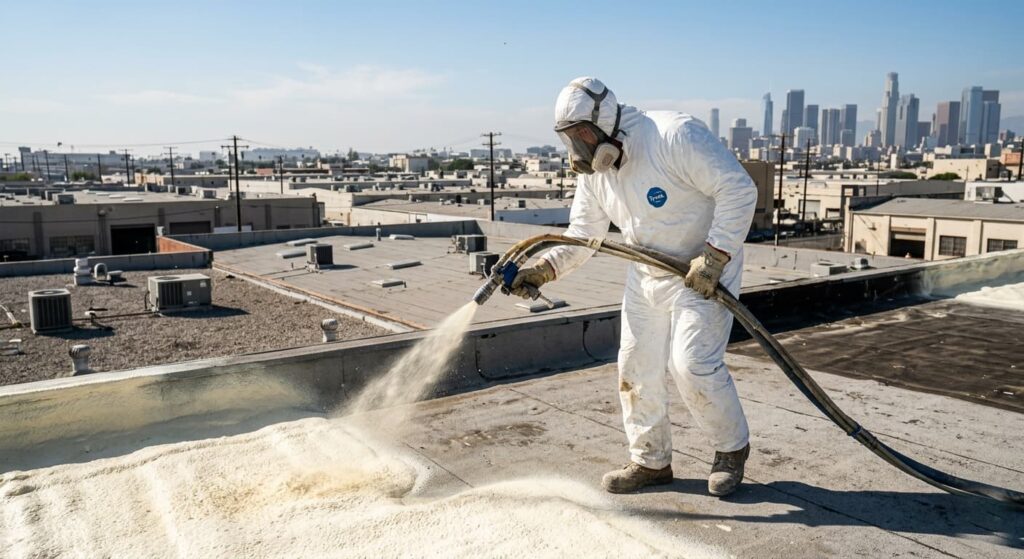
Spray polyurethane foam is one of the most environmentally efficient roofing technologies available for flat and low-slope commercial roofs. Applied directly to the existing roof surface, SPF eliminates the need to tear off and landfill your old roofing material — one of the most significant environmental advantages any roofing system can offer.
SPF creates a seamless, fully adhered surface with no seams or laps for water to penetrate. Its closed-cell structure provides exceptional thermal insulation (an R-value of approximately 6.5 per inch, one of the highest available in commercial roofing), significantly reducing heating and cooling loads. SPF roofs can be renewed indefinitely with a fresh protective coating layer, meaning the same roof can remain in service for decades with no landfill waste at end of life.
2. Silicone Roof Coatings & Restoration Systems
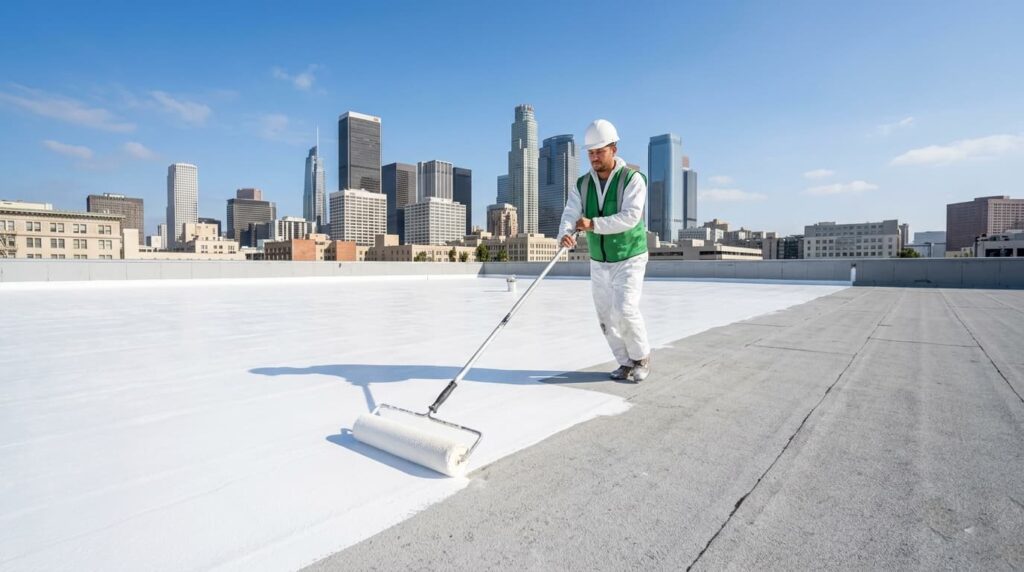
Silicone roof coatings are the most environmentally compelling choice for aging commercial roofs that still have structural integrity. Rather than tearing off an existing system and sending thousands of pounds of roofing material to a landfill, silicone restoration applies a new weatherproofing layer directly over the existing surface — extending the roof’s lifespan by 10–20 years with minimal material consumption.
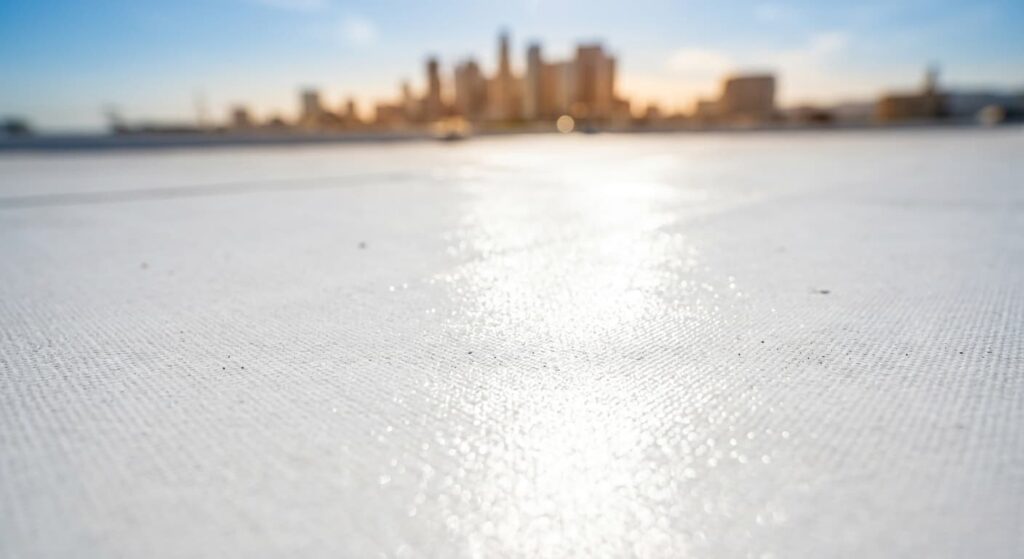
Silicone coatings are highly reflective, UV-stable, and unaffected by ponding water — a significant advantage in Southern California’s climate where drainage systems can be overwhelmed during heavy rainfall events. They meet ENERGY STAR reflectance standards, qualify for utility rebates in many California jurisdictions, and require zero ongoing maintenance once applied.
3. TPO Single-Ply Roofing
Thermoplastic Polyolefin (TPO) is one of the most popular environmentally friendly roofing membranes for commercial new construction and full replacements. TPO’s white or light-colored surface delivers high solar reflectance, earning ENERGY STAR certification and meeting California’s Title 24 cool roof requirements on most installations.
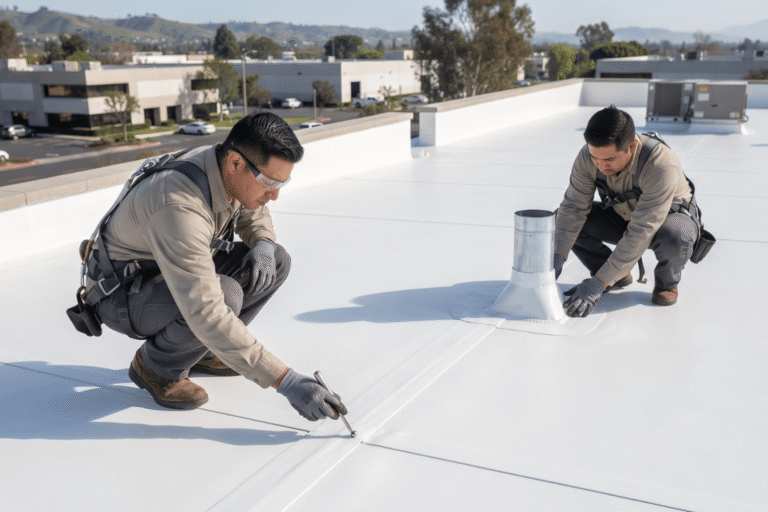
TPO membranes are also notable for being recyclable at end of life — a meaningful advantage over materials that go directly to landfill. Applied Roofing Services installs TPO systems with heat-welded seams that create a monolithic, highly durable weatherproof surface with manufacturer warranties available up to 20 years.
4. PVC Single-Ply Roofing
PVC roofing membranes offer similar reflectivity and energy efficiency to TPO, with the added benefit of exceptional chemical and fire resistance — making them a particularly strong choice for restaurant rooftops, manufacturing facilities, and properties where rooftop exhausts or grease exposure are a concern. Like TPO, white PVC membranes meet cool roof standards and can significantly reduce urban heat island contribution.
| Roofing System | Key Environmental Benefit | ENERGY STAR Eligible | Title 24 Compliant | Landfill Diversion |
|---|---|---|---|---|
| Spray Polyurethane Foam (SPF) | No tear-off waste; highest insulation R-value | Yes (with approved coating) | Yes | ✅ Full (overlays existing roof) |
| Silicone Coating Restoration | Extends existing roof life; eliminates replacement waste | Yes | Yes | ✅ Full (no tear-off) |
| TPO Single-Ply | High solar reflectance; recyclable membrane | Yes | Yes | ⚠️ Partial (old roof removed) |
| PVC Single-Ply | High reflectance; chemical and fire resistant | Yes | Yes | ⚠️ Partial (old roof removed) |
The Real Financial Benefits of Green Roofing in Los Angeles & Orange County
Sustainability and profitability are not in conflict when it comes to commercial roofing. In fact, the most environmentally responsible roofing choices are often the most economically sound ones over a building’s lifetime. Here’s the financial case for making the switch:
Lower Energy Bills — Every Month, Every Year
A cool, reflective roof reduces the amount of solar heat transferred into your building, directly cutting air conditioning loads. In Southern California’s climate, where commercial buildings may run HVAC equipment 10–11 months of the year, the savings are consistent and meaningful. Property owners with ENERGY STAR-rated roofing systems report cooling energy reductions of 7–15% annually, according to data from the ENERGY STAR program. On a large commercial facility spending $50,000 per year on cooling, that’s $3,500 to $7,500 in annual savings — year after year.
Longer Roof Lifespan — Lower Lifetime Cost
UV radiation is one of the primary causes of commercial roof membrane degradation. Reflective roofing systems that deflect UV energy rather than absorbing it experience significantly less thermal stress cycling — the expansion and contraction that eventually causes membrane brittleness, cracking, and seam failure. Systems like spray foam with a silicone topcoat or a well-maintained TPO membrane routinely outperform conventional dark roofing by 5–10 years, dramatically reducing total cost of ownership.
Utility Rebates & Incentive Programs
California utilities — including Southern California Edison and Southern California Gas — offer rebate programs for energy-efficient building improvements, including qualifying cool roof installations. The California Public Utilities Commission (CPUC) administers energy efficiency programs that can offset a portion of your installation cost. Applied Roofing Services can help you identify which incentives apply to your property and roofing system choice before installation begins.
Property Value & Marketability
Green building certifications and energy-efficient systems are increasingly valued in commercial real estate. Tenants in Los Angeles and Orange County — particularly corporate tenants with their own sustainability commitments — actively seek out energy-efficient buildings. An ENERGY STAR or LEED-contributing roofing system can be a meaningful differentiator in a competitive leasing market, supporting higher rents and lower vacancy rates.
The Numbers That Matter: According to the U.S. Green Building Council, green commercial buildings command rental premiums of 3–7% and sell at premiums of 7–16% over comparable conventional buildings. Environmentally friendly roofing is a meaningful contributor to those figures.
California Regulations & Compliance: What Commercial Property Owners Need to Know
California is the most aggressive state in the country when it comes to building energy efficiency regulation. For commercial roofing specifically, the requirements are clear and the enforcement is real. Here’s what applies to your property:
Title 24 Cool Roof Requirements
California’s Title 24 Building Energy Efficiency Standards require that most new and replacement commercial roofs meet minimum solar reflectance and thermal emittance standards — effectively mandating cool roofing on virtually all low-slope commercial projects. The specific requirements vary by climate zone, but properties in Los Angeles and Orange County fall under zones that require a minimum initial solar reflectance of 0.63 and thermal emittance of 0.75 for low-slope roofs.
All of the roofing systems Applied Roofing Services installs are designed to meet or exceed these requirements. We handle Title 24 compliance documentation as part of every qualifying installation.
CALGreen Building Standards
California’s Green Building Standards Code (CALGreen) establishes mandatory measures for sustainable construction, including requirements around construction waste diversion, material sourcing, and building performance. Roofing restoration systems that avoid tear-off — like spray foam overlays and silicone coating systems — contribute directly to CALGreen waste diversion goals, which can simplify the permit process for some project types.
South Coast AQMD Considerations
The South Coast Air Quality Management District (AQMD) regulates VOC emissions from roofing materials and adhesives used in the Los Angeles Basin and Orange County. Applied Roofing Services uses low-VOC and compliant products throughout our installations, ensuring your project meets all applicable air quality requirements — a factor that is sometimes overlooked by contractors less familiar with Southern California’s regulatory environment.
Environmentally Friendly Roofing Costs in Southern California: A Realistic Breakdown
One of the most common misconceptions about green roofing is that it costs significantly more than conventional alternatives. The reality is more nuanced — and in many cases, environmentally friendly systems offer a lower total cost of ownership even when upfront installation costs are comparable to conventional options.
| System | Typical Cost Range (per sq. ft.) | Expected Lifespan | Best Application |
|---|---|---|---|
| Silicone Coating Restoration | $2.00 – $4.50 | 10–20 additional years | Aging roofs with sound substrate |
| Spray Polyurethane Foam (SPF) | $4.00 – $7.00 | 20–30+ years (with recoat) | Flat/low-slope commercial, max insulation |
| TPO Single-Ply (new install) | $5.00 – $9.00 | 20–30 years | New construction, full replacement |
| PVC Single-Ply (new install) | $6.00 – $10.00 | 20–30 years | Facilities with chemical/grease exposure |
Important context on these numbers: Roof size, current substrate condition, accessibility, and required insulation levels all affect final pricing. A silicone restoration on a clean, structurally sound 10,000 sq. ft. roof will fall toward the low end of its range. A full TPO replacement on a large industrial facility requiring tear-off and insulation upgrades will fall toward the high end of its range.
We provide itemized written estimates before any work begins — no vague square-foot numbers that balloon into something unrecognizable when the invoice arrives. What we quote is what you pay.
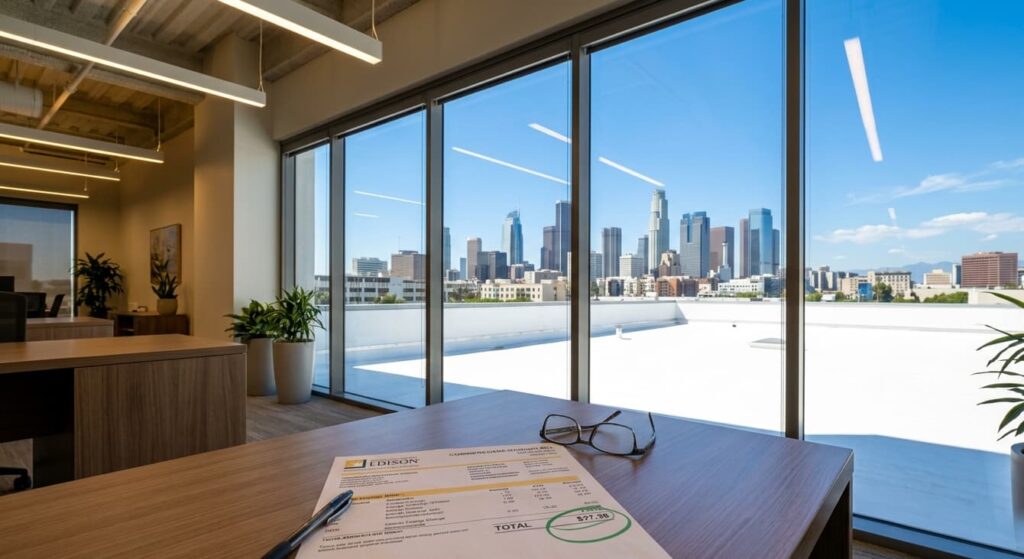
Comparing the True Cost: Green vs. Conventional Roofing
When evaluating roofing options purely on upfront price, a conventional dark-surface modified bitumen or built-up roof may appear cheaper. But that comparison ignores the full picture:
- A conventional roof that costs $3.00/sq. ft. but increases your annual cooling bill by $8,000 costs far more over 15 years than a cool roof at $5.00/sq. ft. that reduces cooling costs by $5,000 annually.
- A system that requires replacement in 12 years costs more than a system that lasts 25 years with a mid-life recoat.
- A tear-off replacement generates significant debris disposal costs — often $0.50–$1.50/sq. ft. in hauling and tipping fees — that restoration systems eliminate entirely.
We encourage every property owner to run the 20-year total cost of ownership calculation before making a roofing decision based on upfront price alone. Our team is happy to walk through that analysis with you during your free estimate.
Green Roofing & California's Urban Heat Island Problem
Los Angeles is one of the most studied urban heat island environments in the world. Decades of replacing natural vegetation and permeable surfaces with dark asphalt, concrete, and conventional roofing has resulted in a measurable temperature increase across the metro area — with consequences that include elevated energy demand, worsened air quality, and greater heat-related health risks for residents.
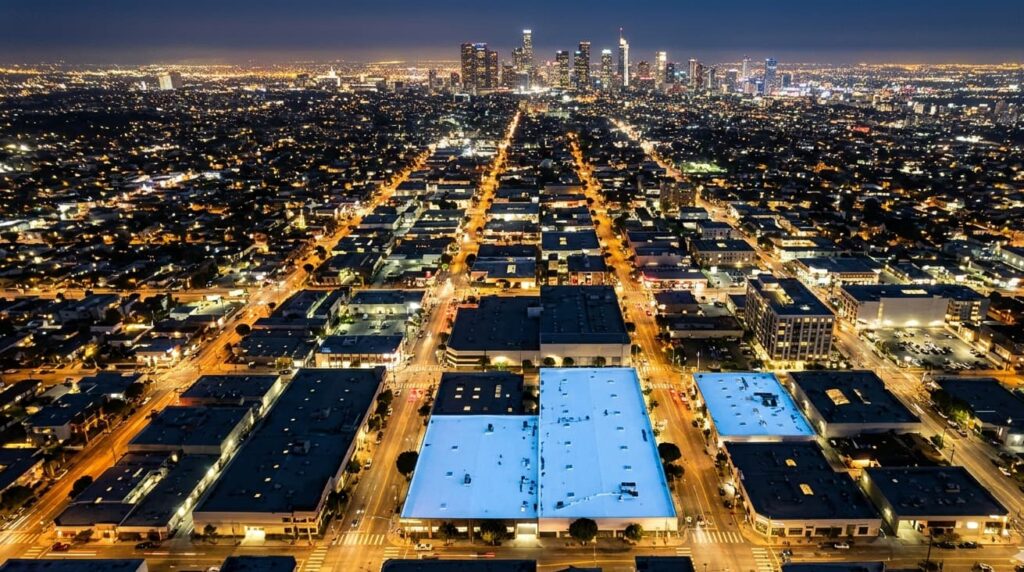
Commercial rooftops represent a significant portion of the urban surface area in any city — and they are one of the most actionable levers property owners have for reducing heat island contribution. The City of Los Angeles Cool LA Initiative specifically recognizes cool commercial roofing as one of the primary strategies for urban heat island mitigation.
When a commercial building in Los Angeles replaces a dark conventional roof with a white or light-colored reflective system, the impact extends well beyond that building’s energy bill. Reflective roofs reduce the amount of heat radiated back into the surrounding environment, contributing to cooler ambient temperatures in the neighborhood. At scale — across thousands of commercial buildings — this effect is significant and measurable.
For Applied Roofing Services, this isn’t abstract environmental theory. It’s the practical reason we have been committed to energy-efficient, reflective roofing systems since our founding in 2003 — long before cool roofing became a regulatory mandate.
The Applied Roofing Services Approach to Sustainable Roofing
Installing an environmentally friendly roof isn’t just a matter of selecting the right membrane or coating — it’s also about how the work is performed. At Applied Roofing Services, our commitment to sustainability extends to our installation practices:
Prioritizing Restoration Over Replacement
Whenever the existing roof substrate is structurally sound, we recommend restoration over full replacement. Roofing tear-off generates an enormous amount of landfill waste — the U.S. Environmental Protection Agency (EPA) estimates that construction and demolition debris, including roofing materials, accounts for more than 600 million tons of waste annually in the United States. By choosing a foam overlay or silicone restoration system, you eliminate your project’s contribution to that waste stream entirely.
Material Selection & Manufacturer Standards
We work with manufacturers who are members of the Spray Polyurethane Foam Alliance (SPFA) and whose products are certified by the Cool Roof Rating Council (CRRC) — the industry body that independently verifies the reflectance and emittance ratings of roofing products. You can see CRRC and ENERGY STAR certifications on display in our office and on our website, because these credentials matter and we want our clients to know we’ve earned them.
Minimizing Disruption to Your Operations
Green roofing systems — particularly spray foam and silicone coatings — have the additional practical advantage of fast, low-disruption installation. Because they apply directly over existing surfaces without the noise, debris, and structural stress of a tear-off, they allow most commercial operations to continue without interruption during the project. For retail, hospitality, healthcare, and office tenants, that operational continuity has real business value.
Long-Term Partnership & Maintenance
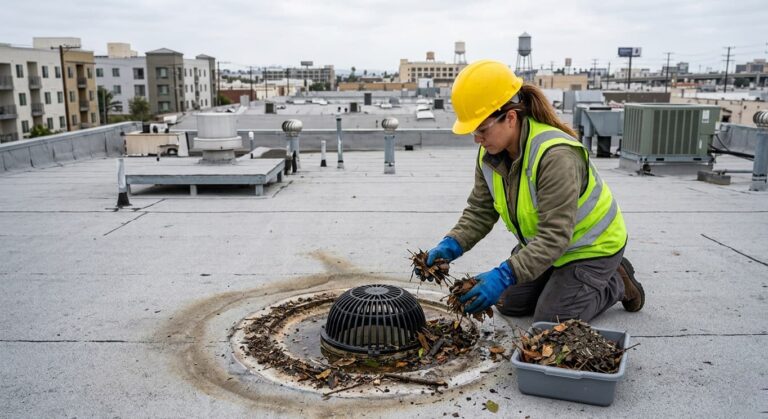
A truly sustainable roofing approach includes ongoing maintenance to protect your investment. Applied Roofing Services offers commercial roof maintenance programs that keep your green roofing system performing at peak reflectance and weatherproofing efficiency for its full intended lifespan — catching small issues before they become costly problems.
“ARS has been my only foam roofing contractor for nearly 15 years. Their service is excellent and price competitive. I would recommend them highly.”
“Jeff and Jim Cardenas have always been responsive and easy to work with, have done what they said they would do, and gotten the job done within a reasonable amount of time.”
Is Your Commercial Building a Good Candidate for Green Roofing?
Not every property needs the same solution, and part of what makes Applied Roofing Services a trusted partner for commercial property owners is our commitment to recommending the right system for each specific building — not the most expensive one, and not a one-size-fits-all approach.
Best Candidates for Silicone Coating Restoration
- Flat or low-slope commercial roofs with an existing foam, TPO, EPDM, or modified bitumen surface that is structurally intact
- Buildings where a full replacement budget isn’t available but meaningful life extension is needed
- Owners who want to maximize landfill diversion and minimize project disruption
- Properties approaching the end of a manufacturer warranty where recoating will renew coverage
Best Candidates for Spray Polyurethane Foam
- Commercial properties with irregular rooflines, multiple penetrations, or drainage challenges where a seamless system provides significant leak-prevention advantages
- Buildings in need of significant insulation upgrades (older structures with minimal existing insulation)
- Properties seeking the maximum combination of energy efficiency and weatherproofing in a single system
Best Candidates for TPO or PVC Single-Ply
- New construction commercial projects requiring a Title 24-compliant system from the ground up
- Full roof replacements where the existing substrate is too degraded for restoration
- Facilities with specific chemical resistance requirements (PVC for restaurant and manufacturing applications)
The fastest way to find out which system is right for your building is a professional roof inspection. Applied Roofing Services provides free commercial roofing assessments — no obligation, no pressure, just a clear-eyed evaluation of your current roof and an honest recommendation for the best path forward.
Get Your Free Green Roofing Assessment
Los Angeles: (213) 255-3677
Inland Empire: (909) 361-6119
Or schedule your free estimate online →
Serving Los Angeles, Orange County & the Inland Empire
Applied Roofing Services installs environmentally friendly roofing systems for commercial properties throughout Southern California from three office locations, allowing us to serve a wide geographic area while maintaining the responsiveness of a local contractor:
- Orange County: Anaheim, Orange, Santa Ana, Fullerton, Irvine, Costa Mesa, Huntington Beach, Garden Grove, Yorba Linda, Brea, Placentia, Tustin, Buena Park, Westminster
- Los Angeles County: Los Angeles (DTLA, Hollywood, Mid-Wilshire, Koreatown), Burbank, Glendale, Long Beach, Torrance, Carson, El Monte, Pasadena, Pomona, West Covina, Inglewood
- Inland Empire: Rancho Cucamonga, Ontario, Fontana, Rialto, San Bernardino, Chino, Upland, Redlands
Not sure if we cover your address? Call us — we’ll let you know right away and schedule an assessment if we do.
Make the Sustainable Choice for Your Commercial Property. Contact Applied Roofing Services Today.
Applied Roofing Services has been helping Southern California commercial property owners make smarter, greener roofing decisions since 2003. We are fully licensed, insured, and certified to install ENERGY STAR-rated, Title 24-compliant, and CRRC-rated roofing systems — and we bring over two decades of real experience to every project we take on in Los Angeles, Orange County, and the Inland Empire.
Whether you are looking to reduce your energy bills, extend the life of your existing roof without a costly replacement, meet California regulatory requirements, or simply make a more responsible choice for your commercial property, we have a sustainable roofing solution that fits your building, your budget, and your timeline.
The consultation is free. The savings are real. Let’s get started.
- Orange County: (714) 632-8418 — 1961 N. Main St., Orange, CA 92865
- Los Angeles: (213) 255-3677 — 1055 West 7th Street, 33rd Floor, Los Angeles, CA 90017
- Inland Empire: (909) 361-6119 — 8333 Foothill Blvd, Rancho Cucamonga, CA 91730
Or submit your project details online and we’ll be in touch promptly to schedule your free assessment.
Explore more about our specific systems: Spray Polyurethane Foam Roofing · Silicone Roof Coatings · Single-Ply TPO & PVC Roofing · Commercial Roof Replacement & Restoration
Frequently Asked Questions
What makes a roofing system "environmentally friendly"?
A truly environmentally friendly roofing system reduces energy consumption through high solar reflectance and thermal emittance, minimizes construction waste through restoration-based approaches, uses materials with low VOC emissions, and provides a long service life that reduces the frequency of replacement. The most sustainable roofing systems in commercial applications — spray polyurethane foam, silicone coatings, and reflective single-ply membranes — meet all of these criteria simultaneously.
Does California require cool roofing on commercial buildings?
Yes, in most cases. California’s Title 24 Building Energy Efficiency Standards require that new and replacement low-slope commercial roofs meet minimum solar reflectance and thermal emittance standards, effectively mandating cool roofing across the vast majority of commercial applications. Applied Roofing Services installs systems that comply with these requirements and handles Title 24 documentation as part of our installation process.
How much can an energy-efficient roof reduce my electricity bill?
Results vary based on building type, HVAC system, existing insulation, and local climate conditions, but commercial property owners in Southern California with reflective roofing systems typically see cooling energy reductions of 7–15% annually. For a large commercial facility, this can represent thousands of dollars in annual savings. Buildings with spray polyurethane foam roofing — which adds significant insulation in addition to reflectance — often achieve even greater energy reductions.
Is green roofing more expensive than conventional roofing?
Upfront installation costs for energy-efficient systems are generally comparable to conventional commercial roofing, and in some cases lower — silicone restoration systems, for example, typically cost significantly less than a full tear-off and replacement. When evaluated on a total cost of ownership basis — factoring in energy savings, longer lifespan, reduced maintenance, and avoided replacement costs — environmentally friendly roofing systems consistently outperform conventional alternatives over any 15- to 20-year horizon.
Are there rebates or incentives available for green roofing in California?
Yes. Southern California Edison, Southern California Gas, and other utilities offer rebate programs for qualifying energy efficiency improvements, including cool roof installations. The California Public Utilities Commission administers statewide energy efficiency programs with additional incentives. Federal tax deductions may also be available for commercial energy efficiency improvements under the Section 179D deduction. We recommend consulting with your tax advisor to evaluate which incentives apply to your specific situation.
How long does a green roofing installation take on a commercial building?
Silicone coating restoration systems are among the fastest commercial roofing installations available — a typical 10,000–20,000 sq. ft. commercial roof can often be completed in 2–5 days with minimal business disruption. Spray polyurethane foam systems take slightly longer due to surface preparation and application requirements. Full single-ply replacements (TPO or PVC) take longer still, depending on roof size and tear-off requirements. We provide a detailed project timeline as part of every estimate.
Can I get a LEED credit for installing an environmentally friendly roof?
Yes. Reflective roofing systems can contribute to LEED certification under the Sustainable Sites and Energy & Atmosphere categories, depending on the specific LEED rating system and version being pursued. Applied Roofing Services is familiar with the documentation requirements for LEED-contributing roofing installations and can work with your project team to ensure compliance. Consult with your LEED project administrator for specific credit availability on your project.
Does an environmentally friendly roof require special maintenance?
No more than any other commercial roofing system — and in some cases, less. Silicone coatings, for example, are unaffected by ponding water and require no ongoing treatments or sealing. Spray polyurethane foam roofs should have their protective coating inspected every 5–10 years and recoated when the coating reaches a minimum thickness. Regular inspections — ideally twice per year — keep any commercial roof performing at its best and catch developing issues before they become costly. Applied Roofing Services offers ongoing maintenance programs for all of the systems we install.