The Ultimate Guide to Hiring a Commercial PVC Roofing Contractor in Southern California
Okay, real talk for a second.
If you manage a commercial property in Southern California, your roof is basically doing a full-time job in some of the harshest conditions on the planet. Blazing UV rays, thermal expansion, the occasional surprise rainstorm — your flat roof takes all of it without complaint. Until one day, it does complain. Loudly. In the form of a leak right above your most expensive piece of equipment.
That’s the moment every facility manager dreads. And it’s also the moment you start Googling “PVC roofing contractor near me” at 11pm.
We’ve got you. This guide breaks down everything you need to know about PVC commercial roofing in Southern California — why it works, what it costs, how it compares to the competition, and why Applied Roofing Services (serving SoCal since 2003, by the way) has become the go-to team for building owners who want zero headaches and a roof that just works.
The High Cost of Failing Flat Roofs on Commercial Properties
Let’s start with some uncomfortable math.
The average commercial roof leak costs between $5,000 and $15,000 in immediate water damage repairs — and that’s before you factor in inventory loss, equipment damage, tenant complaints, or the liability nightmare that follows. A 2024 industry study found that water intrusion is the #1 cause of unplanned facility maintenance spend for commercial property owners. Not HVAC, not electrical. Roofing.
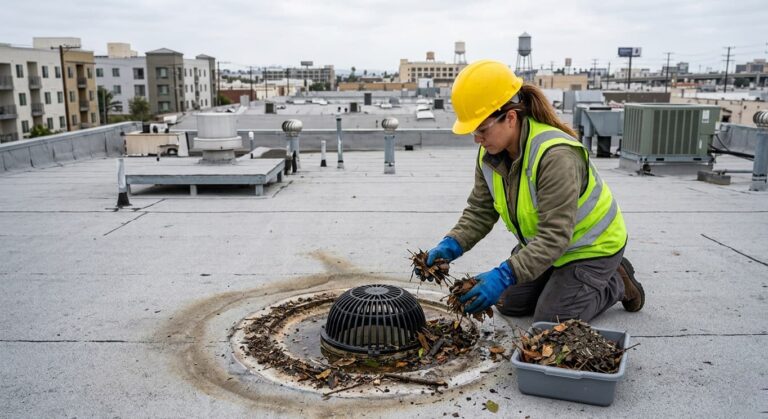
Here’s the thing that makes it even more frustrating: most catastrophic commercial roof failures don’t happen overnight. They build up slowly. A blister here, a failed seam there, a little pooling water that you tell yourself is “not a big deal.” Then one heavy rain — and SoCal does get them — and suddenly you’re dealing with a full-blown crisis.
The hidden costs nobody talks about:
- Mold remediation after prolonged moisture intrusion can run $10,000–$50,000+ depending on the square footage affected
- Tenant turnover triggered by leak complaints, which commercial property managers consistently cite as one of their top operational nightmares
- Business interruption if the affected space has to be temporarily vacated
- Insurance premium hikes after repeated claims
The math is pretty clear: a proactive investment in a quality PVC roofing system costs a fraction of what you’ll pay cleaning up after a failing roof. It’s not a cost — it’s an ROI decision.
Why PVC Is the Ultimate Material for Southern California Facilities
Here’s a fun fact: PVC roofing membranes have been around since the 1960s. That means the technology is mature, battle-tested, and continually refined. This isn’t some trendy new material — it’s a proven system with decades of real-world performance data behind it.
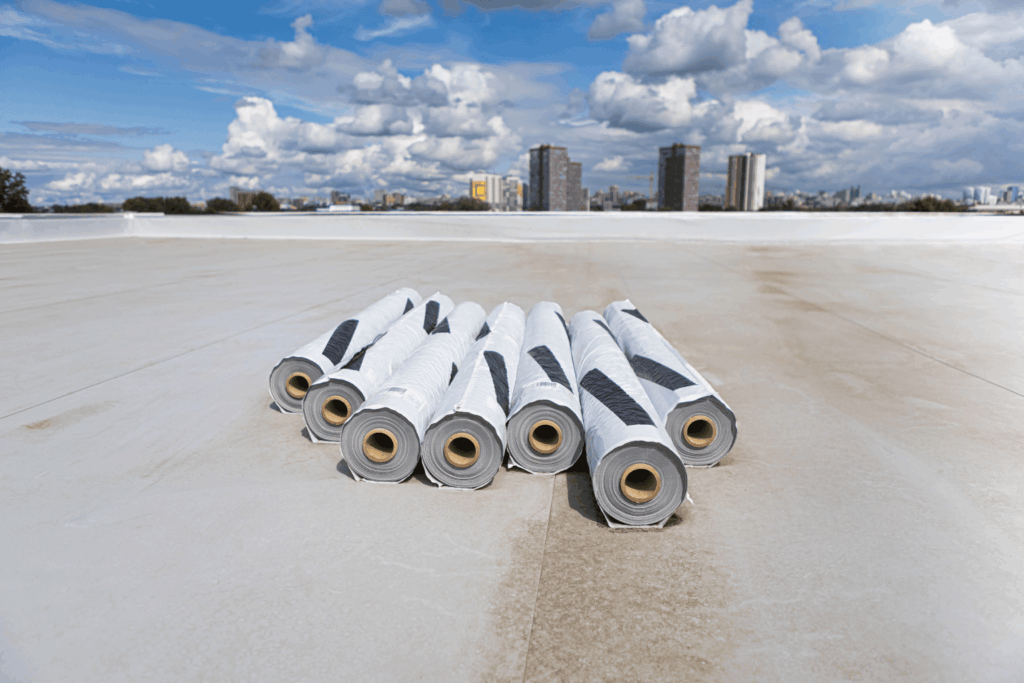
But why is it especially perfect for Southern California? Glad you asked.
UV Resistance That Actually Holds Up
SoCal averages around 284 sunny days per year. That’s beautiful for beach trips and absolutely brutal for roofing materials. UV radiation degrades most organic materials over time, causing cracking, brittleness, and membrane breakdown. PVC is inherently UV-stable, meaning the surface doesn’t oxidize or chalk out the way older roofing materials do. As a PVC roofing contractor, we’ve pulled up 20-year-old PVC membranes that still looked and performed remarkably well.
Chemical Resistance for Restaurants and Industrial Facilities
This one’s a big deal and honestly underappreciated. If you own or manage a restaurant, food processing facility, or industrial building, your roof is regularly exposed to cooking grease, exhaust oils, and chemical runoff. TPO — PVC’s main competitor — breaks down when exposed to animal fats and cooking oils. PVC doesn’t. It’s chemically inert to most common commercial contaminants, which is why every experienced PVC roofing contractor will tell you it’s the only real choice for food service buildings.
Title 24 Compliance (Without Trying Very Hard)
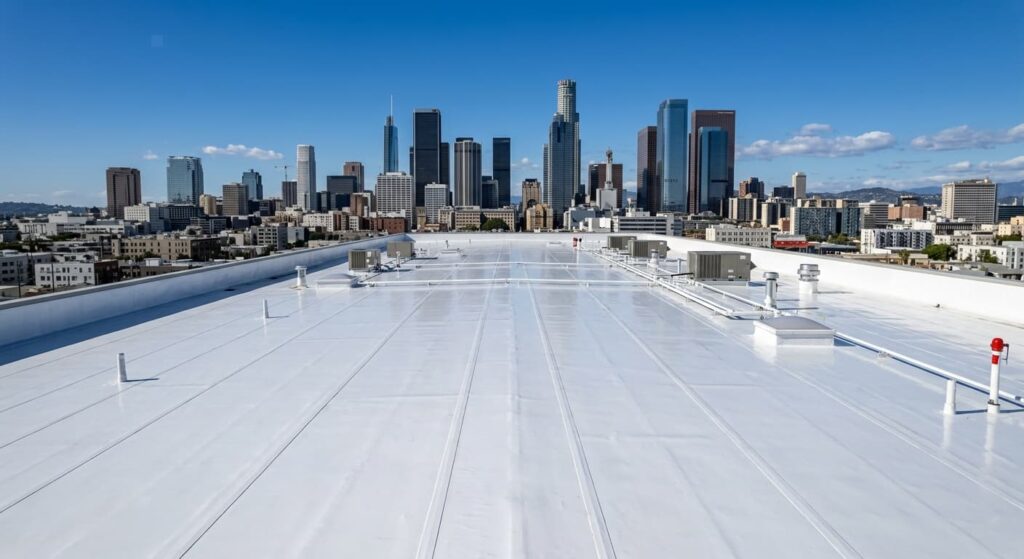
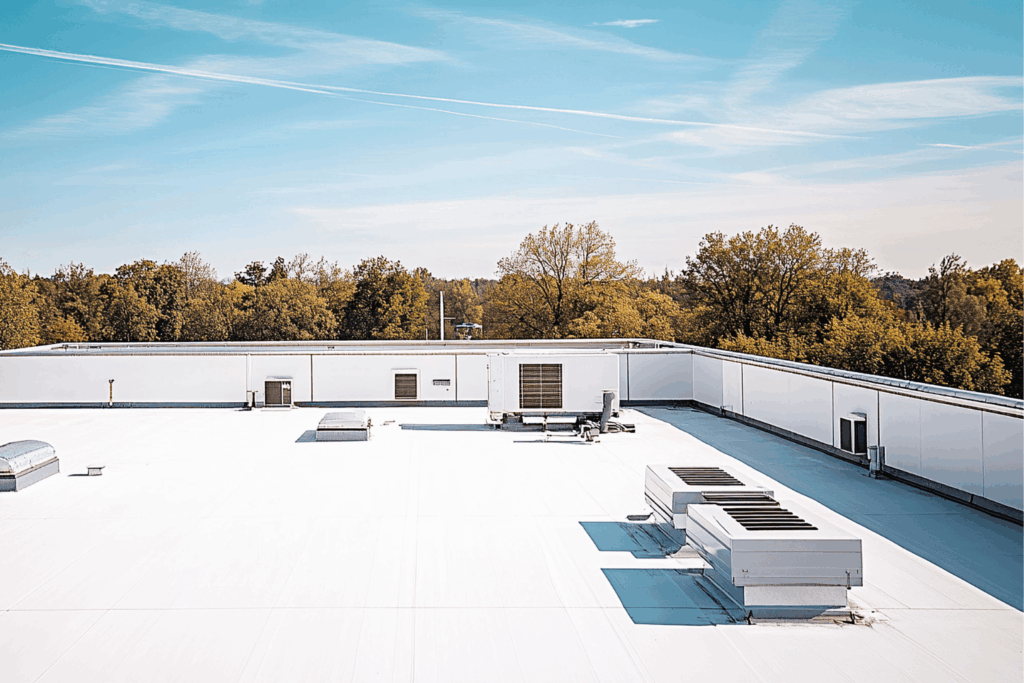
California’s Title 24 energy code is one of the strictest in the country, and in 2026 it got even more demanding. The code requires commercial buildings to meet specific solar reflectance and thermal emittance standards. A white PVC membrane reflects up to 80% of solar radiation — it basically meets Title 24 cool roof requirements right out of the box. Less bureaucratic headache for you, lower energy bills from day one.
Commercial Roofing Trends for 2026: The Evolution of Single-Ply
The roofing industry in 2026 isn’t your grandfather’s shingles-and-tar business. Things are moving fast, and the best PVC roofing contractors are staying ahead of the curve. Here’s what’s shaping the commercial market right now.
Hyper-Reflective “Cool Roofs” Are Now the Standard
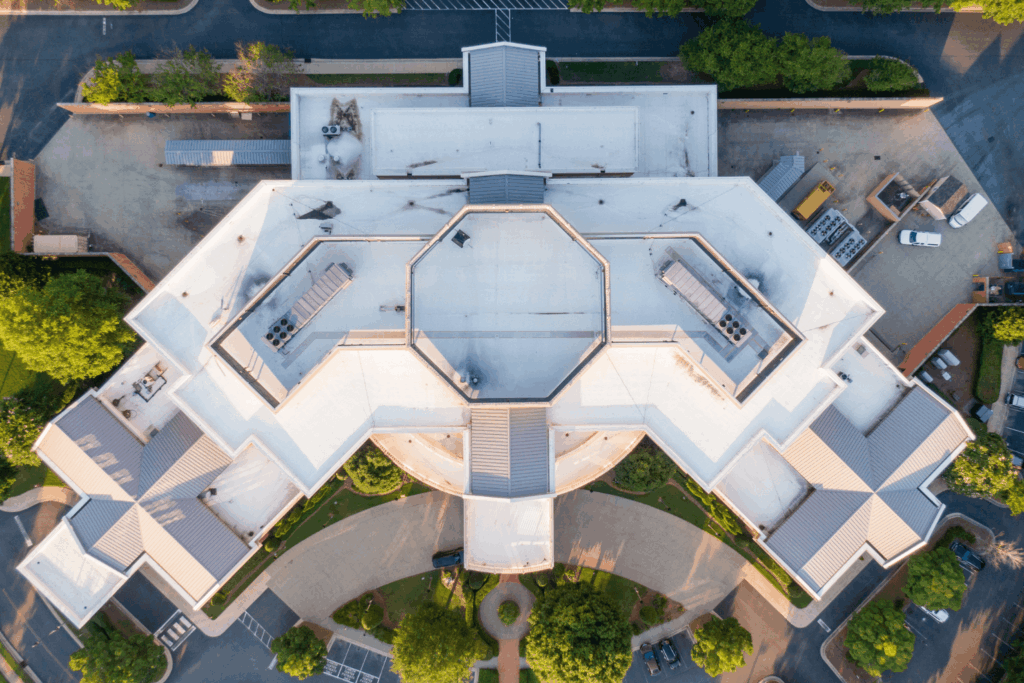
California’s 2026 energy codes have officially made cool roofs the default, not the upgrade. The state’s push toward net-zero commercial buildings means that your roof’s thermal performance is now scrutinized as closely as your HVAC system. PVC’s white, reflective surface reduces roof surface temperatures by up to 50–60°F compared to a dark membrane — translating directly into 20–30% lower cooling energy costs during those scorching SoCal summers.
Solar-Ready Roofing Infrastructure
Here’s a stat that’ll make your CFO pay attention: commercial solar panels have a 25-year expected lifespan. If your roof has 8 years left on it and you’re planning a solar installation, you’re going to have to tear off your solar array to re-roof in less than a decade. That’s an expensive mistake. In 2026, forward-thinking facility managers are specifying 80-mil PVC membranes as the base layer for solar installations — because the roof needs to outlast the panels. As a PVC roofing contractor, we design every solar-ready installation with this lifecycle math built in.
Drone & Thermal Imaging Diagnostics
One of the coolest developments (pun intended) in commercial roofing is AI-assisted thermal drone inspections. Before we design any PVC retrofit, we can fly a thermal imaging drone over your existing roof and detect trapped moisture pockets under old hot mop or gravel systems — without cutting into your roof. This lets us map exactly what needs to come out, what can stay, and where to place recovery board, resulting in a more precise and cost-effective installation.
Material Showdown: PVC vs. TPO vs. EPDM
Okay, let’s settle this debate once and for all with an honest comparison. Every PVC roofing contractor worth their salt should be able to walk you through this clearly.
| Feature | PVC | TPO | EPDM |
|---|---|---|---|
| Lifespan | 20–30 years | 15–20 years | 15–25 years |
| UV Resistance | Excellent | Good | Moderate |
| Chemical Resistance | Excellent (grease, oils, acids) | Poor (breaks down with oils) | Good |
| Title 24 / Cool Roof | ✅ Naturally compliant (white) | ✅ White option available | ❌ Typically black; poor reflectance |
| Seam Strength | Heat-welded (strongest) | Heat-welded | Adhesive/tape (weakest) |
| Solar Panel Compatibility | Excellent (80-mil available) | Good | Fair |
| Flexibility in Cold | Excellent | Good | Excellent |
| Cost per Sq Ft (2026) | $7–$12 | $5–$10 | $4–$8 |
| Best For | Restaurants, industrial, solar-ready | General commercial | Low-budget, simple builds |
The honest takeaway? TPO is cheaper upfront, but it doesn’t hold up to chemical exposure and its seam technology isn’t as proven. EPDM is fine for basic applications but fails the Title 24 cool roof test without modifications. For Southern California commercial properties that need to last, perform, and comply — PVC wins.
The 5 Core Benefits of a Maintenance-Free PVC Roof
When facility managers tell us they want a “set it and forget it” roofing solution, this is what we tell them:
- Energy Efficiency That Pays You Back A white PVC membrane reflects up to 80% of solar energy. On a 20,000 sq ft commercial building in Southern California, that can translate to $8,000–$15,000 in annual HVAC savings depending on your current system. The roof literally starts paying for itself from the first summer.
- Wind Uplift Resistance Modern PVC membranes, when properly installed by an experienced PVC roofing contractor, are tested to resist wind uplift pressures exceeding 90 mph. With SoCal’s Santa Ana wind events becoming more intense each year, this matters more than ever.
- Class A Fire Rating PVC is inherently fire-resistant and achieves a Class A fire rating — the highest possible — without requiring additional coatings or treatments. For commercial facilities subject to strict fire codes, this is a significant checkbox.
- Flexibility Through Thermal Cycling Southern California sees significant day-to-night temperature swings — sometimes 30–40°F in a single day. PVC remains flexible across a wide temperature range, which means it expands and contracts without cracking or splitting. Other membranes become brittle over time under this kind of thermal stress.
5. True Longevity (20–30 Years) When we say maintenance-free, we mean it. The heat-welded seams on a PVC roof form a monolithic, watertight bond. There’s no caulking to re-apply, no seams to re-tape, no ongoing maintenance contract required. A properly installed PVC roof from a qualified PVC roofing contractor is genuinely a “install and breathe easy” investment.
Our Proven Process: Retrofitting Over Torch Down, Hot Mop, and Gravel
Here’s where Applied Roofing Services really stands apart — and where our 20+ years of experience in Southern California pays dividends for our clients.
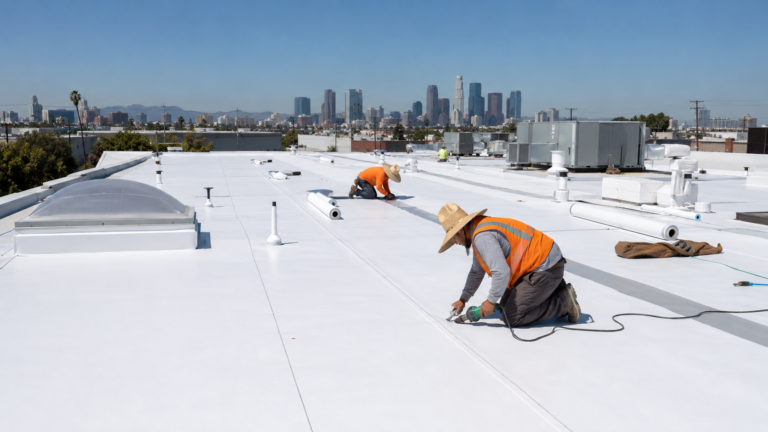
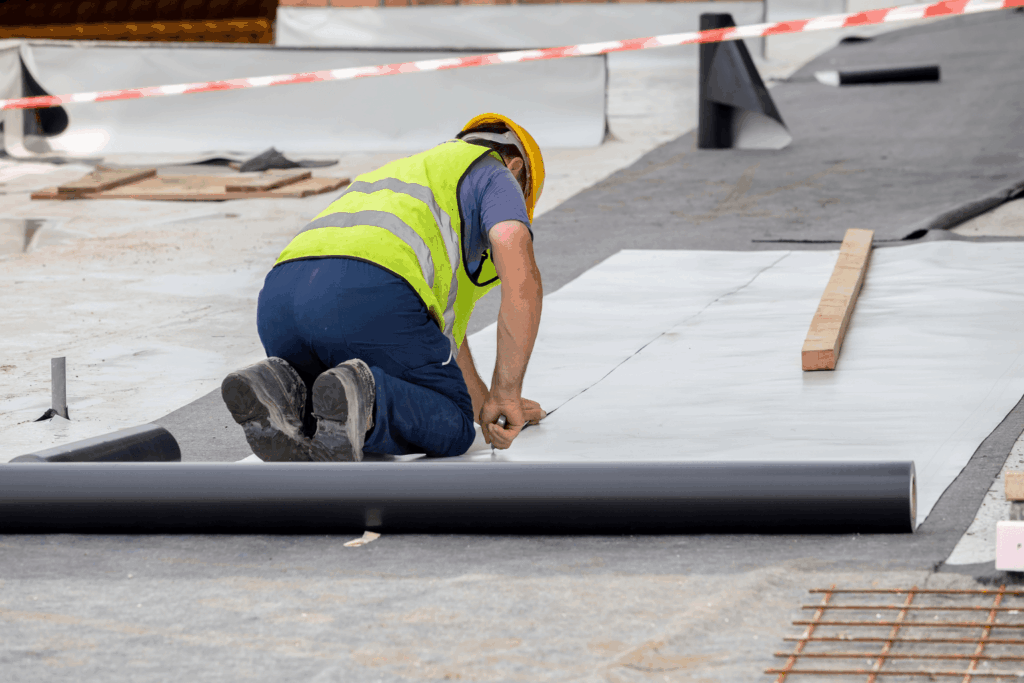
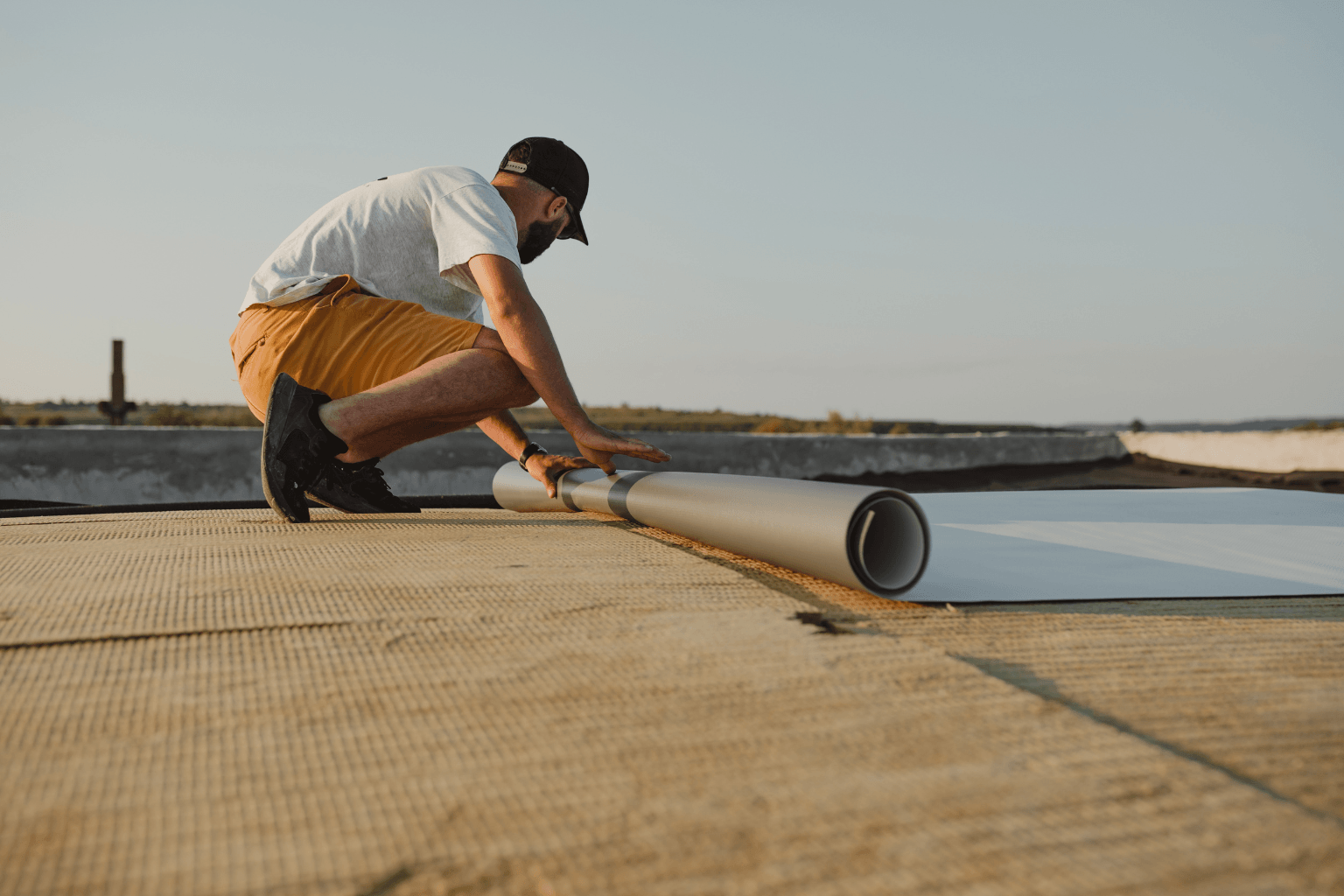
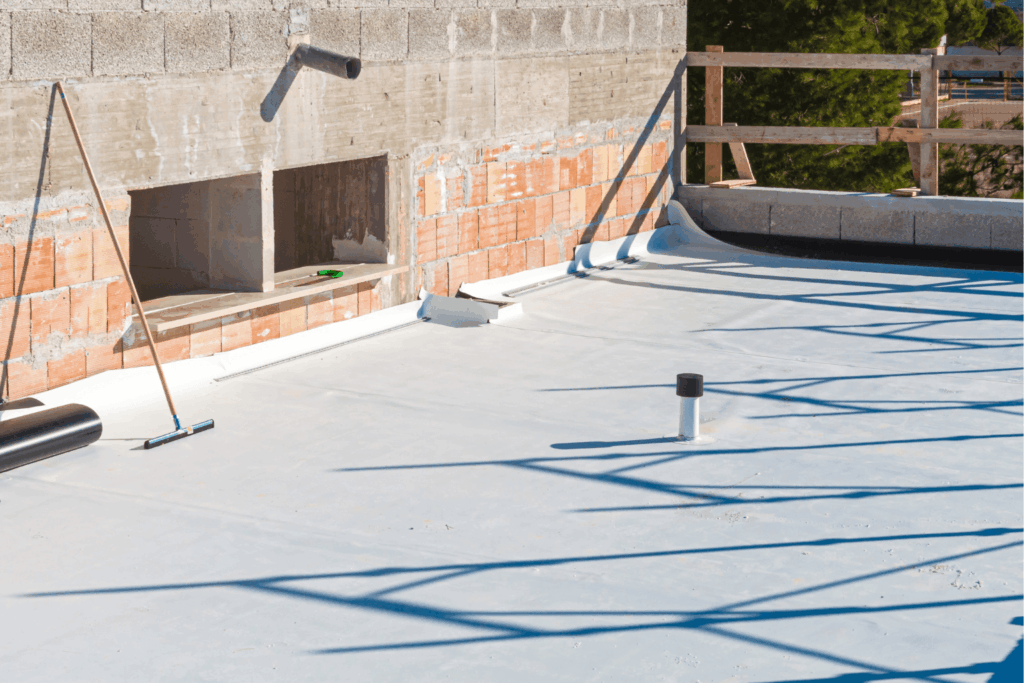
A lot of building owners assume that getting a new roof means a full tear-off: ripping off everything down to the deck, hauling it away, and starting from scratch. That process is expensive, disruptive, and often completely unnecessary. As your PVC roofing contractor, we’ve perfected the art of the custom-fit retrofit, and here’s exactly how it works:
Step 1: Thermal Drone Assessment
Before we touch anything, we conduct a thermal imaging inspection of your existing roof. This maps any moisture-laden sections of your current torch down, hot mop, or gravel system that need to be addressed before overlaying new material.
Step 2: Targeted Removal of Compromised Areas
We don’t tear off what’s working. Wet or severely damaged sections are removed surgically, reducing your tear-off and landfill disposal costs dramatically. On a typical 10,000 sq ft commercial retrofit, this can save $8,000–$20,000 compared to a full tear-off.
Step 3: Recovery Board Installation
A layer of high-density recovery board (typically polyisocyanurate or HD coverboard) is installed over the existing surface. This creates a clean, smooth substrate for the PVC membrane, adds R-value to your building envelope, and provides the structural platform for proper membrane attachment.
Step 4: Custom PVC Membrane Specification
No two roofs are the same. We specify the exact mil thickness (60-mil, 72-mil, or 80-mil for solar-ready), the attachment method (mechanically attached vs. fully adhered based on your building’s wind zone and deck type), and any custom detailing for penetrations, HVAC curbs, and drains.
Step 5: Hot-Air Welded Installation
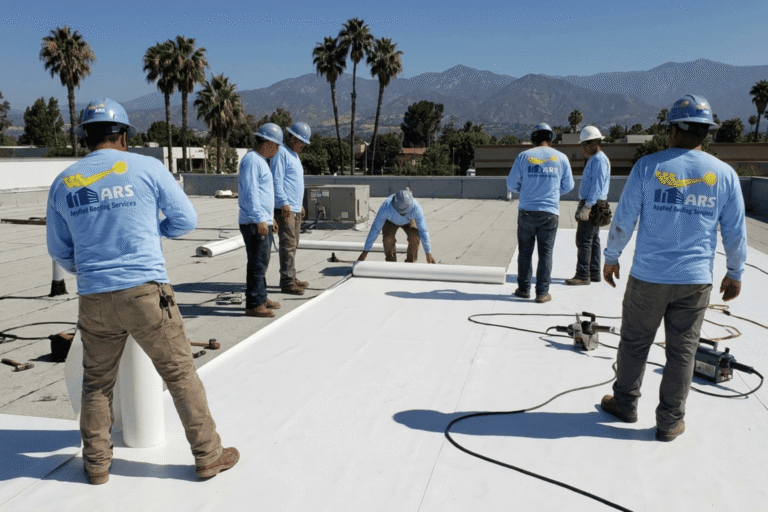
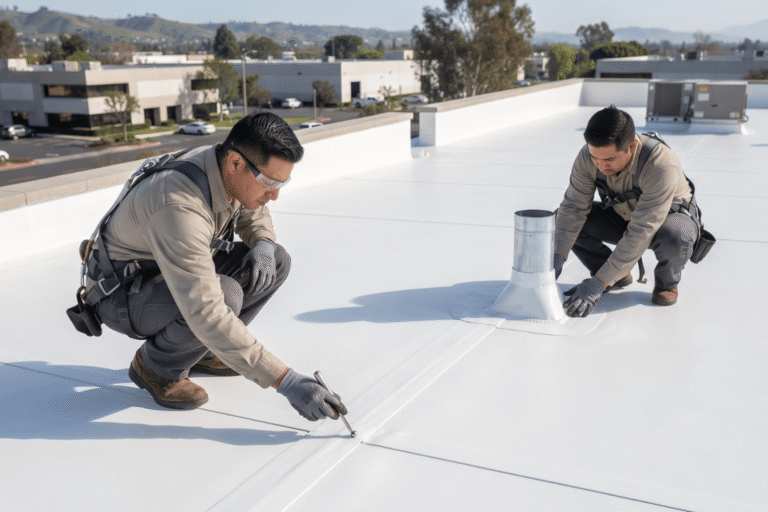
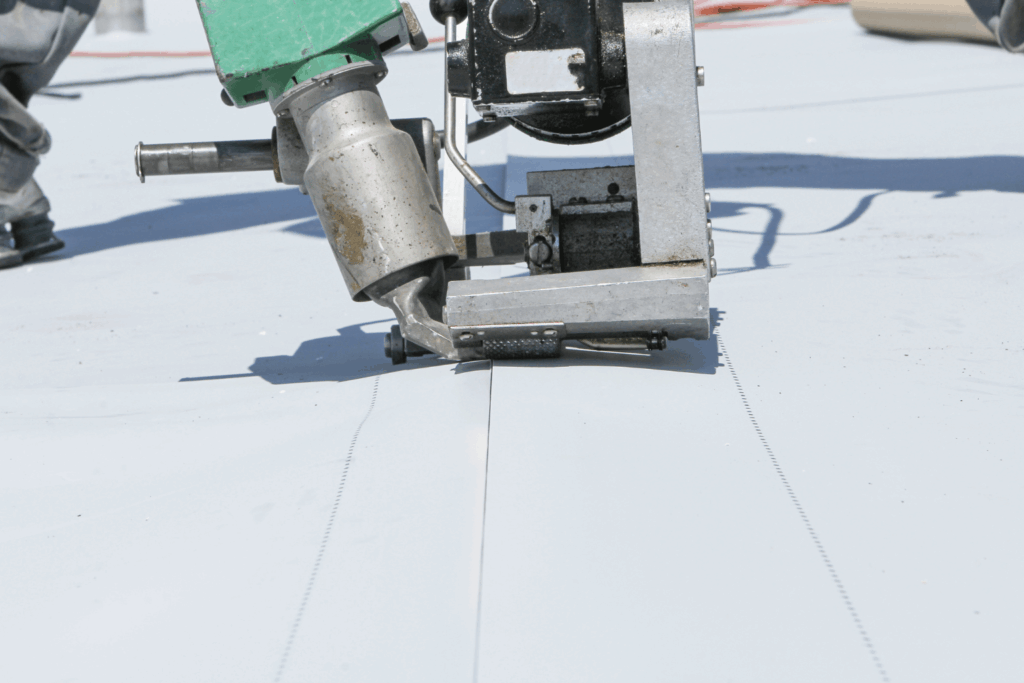
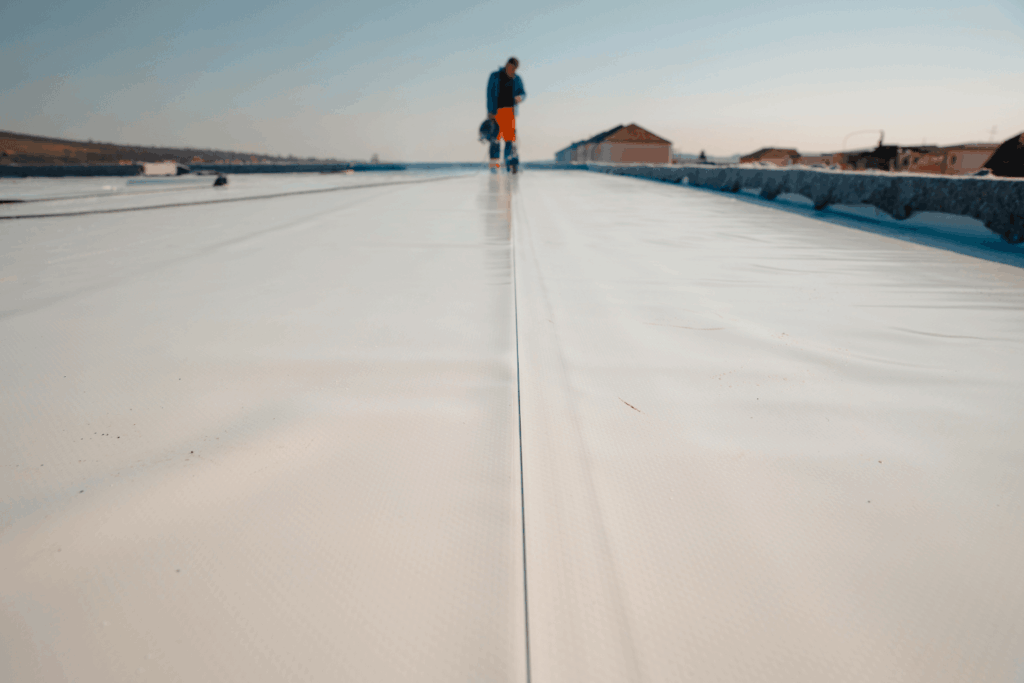
This is where our certified crews earn their reputation. Every seam is hot-air welded using precision equipment that creates a molecular bond — not a glue joint, not a tape seam, but a bond that’s actually stronger than the membrane itself. This is the most critical quality differentiator between a specialized PVC roofing contractor and a general roofer who dabbles in membrane work.
Step 6: Final Inspection & Warranty Documentation
Every installation concludes with a detailed seam probe inspection, a final walkthrough, and full manufacturer warranty documentation. Our clients get peace of mind in writing.
Ready to Talk to a PVC Roofing Contractor Who Actually Gets It?
Look, there are a lot of roofing companies in Southern California. But there aren’t many that have been doing this since 2003, that understand the specific thermal, chemical, and regulatory demands of the SoCal commercial market, and that treat every single roof as a custom engineering challenge rather than a cookie-cutter install.
At Applied Roofing Services, we’ve built our reputation on being the PVC roofing contractor that facility managers call back — not the one they regret calling the first time. Whether you’re managing a retail strip center in the Inland Empire, a food processing facility in the San Fernando Valley, or an industrial complex in the South Bay, we have the experience, the equipment, and the certified crews to deliver a solution that lasts.
Your building is a major asset. Protect it like one.
👉 Get your custom PVC roofing assessment at appliedroofingservices.com
Frequently Asked Questions
How long does a commercial PVC roof last?
A commercial PVC (polyvinyl chloride) roof typically lasts between 20 and 30 years, depending on the membrane thickness (mil), environmental exposure, and the quality of the installation by a certified contractor.
Can you install a PVC roof over an existing flat roof?
Yes, PVC roofing can be installed directly over existing flat roof systems — such as torch down, hot mop, or gravel rock — using a layer of recovery board, which saves facility owners significant tear-off and disposal costs.
Which is better for a restaurant roof: PVC or TPO?
PVC is vastly superior to TPO for restaurant roofs because PVC is inherently highly resistant to animal fats, cooking oils, and grease exhaust, whereas TPO membranes degrade quickly when exposed to these chemicals.
Is a PVC roof truly maintenance-free?
While no roof is 100% maintenance-free, PVC roofs require the absolute minimum upkeep. Their heat-welded seams form a watertight, monolithic bond that does not require the regular caulking or sealing associated with traditional roofing.
How much does a commercial PVC roof cost per square foot in 2026?
In 2026, a commercial PVC roof installation typically costs between $7.00 and $12.00 per square foot, varying based on the building’s height, the condition of the existing substrate, and the thickness of the PVC membrane chosen.
Does a white PVC roof help lower commercial air conditioning bills?
Yes, a white PVC roof reflects up to 80% of the sun’s rays, significantly reducing heat transfer into the building and lowering commercial HVAC cooling costs by up to 20–30% during hot Southern California summers.
What is the difference between a mechanically attached and fully adhered PVC roof?
A mechanically attached PVC roof is secured to the roof deck using heavy-duty screws and plates, while a fully adhered system is glued directly to the insulation board using special adhesives to prevent wind flutter.
Why should I hire a specialized PVC roofing contractor instead of a general roofer?
A specialized PVC roofing contractor possesses the precise hot-air welding equipment and specialized training required to ensure seams are molecularly bonded, which is the most critical factor in preventing commercial roof leaks.