Hail can cause moderate to severe damage to your commercial roof depending on your roofing materials, age of your roof, and the hailstone’s density and size. Therefore, performing a roof inspection following a hail storm can help you detect any signs of damage or repairs needed.
Hail Damage Roof Inspection
Before inspecting your roof, make sure to:
- Have a well-fitting pair of shoes with soft soles
- Check your ladder works well
- Get someone to help you
- Use white-chalk sticks to mark damaged spots and a camera to document the damage
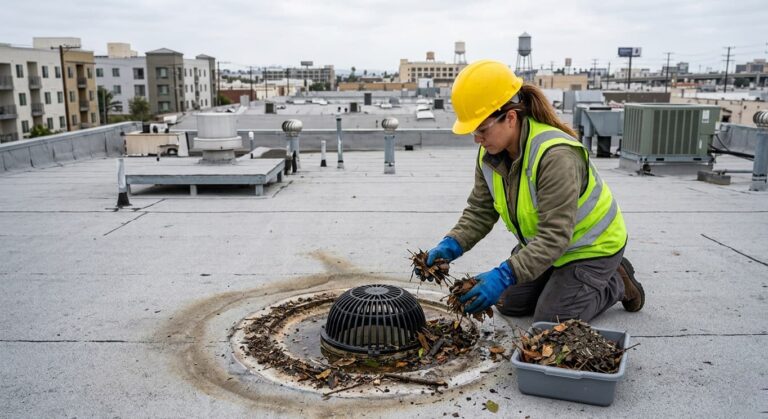
Begin your roof inspection from the ground with a visual analysis of the situation and take photographs from different angles. When you are on the roof, look for cracks, dents, discoloration, and loose granules in gutters. Contact a professional roofing contractor if you cannot inspect your roof or suspect serious damage.
What Size Hail Will Damage My Commercial Roof?
Besides the size of the hailstone, the extent of roof damage depends on the roof condition, wind direction and speed, and storm intensity. However, small and sharp hailstones can also cause significant damage. It is possible to encounter roof damage from ¾” hailstone and no damage from 4” hailstone. Generally, 1” hailstones are considered big enough to damage some commercial roofs, depending on the roof’s age, overall condition, and substrate type.
Different Roofing Materials and Their Hail-Resistant Capacity
- Metal roofs may experience dents following a hailstorm
- Ballasted roofing materials are impervious to hail, unless they are near their life expectancy
- Sprayed foam roofs are vulnerable to hail damage, so an immediate roof inspection after a hailstorm is required
- The extent of hail damage to PVC or TPO roofs depends on the thickness and age of the roof membrane, the rigidity of the substrate, and the density of the center scrim
- Blisters or ridges in modified bitumen or built-up roof systems can be broken by strikes from hailstorms
How Can I Prevent Further Damage to My Commercial Property After a Hail Storm?
After a hail storm, walk through your commercial property to detect any damage and act accordingly. Follow these tips to protect your property from further destruction:
- Cover your roof and vehicle with a tarp to prevent costly damages
- Board up any broken windows
- Move wet items into a dry, safe location
Also Read – 7 Tips for Choosing the Right Commercial Roofing Company
Should I Replace My Roof After Hail Damage?
Though hail roof damage is not immediate, it can significantly impact the lifespan of your roof. After every hailstorm, check your roof for:
- Bare spots on shingles
- Holes and large dents
- Damaged vents
- Damage to skylights
- Granules in gutters and downspouts
These damages need to be fixed quickly. Otherwise, they can weaken the roof membrane, decreasing its ability to resist future problems. If you are looking for hail damage roof repair for commercial buildings, contact Applied Roofing Services in Orange County and Los Angeles at 714-632-8418 to get a quote online.