Flat roofing systems are the backbone of nearly every commercial building in Orange, California — and choosing the right one is one of the most consequential decisions a property owner will make. The membrane over your warehouse, office, retail center, or industrial facility protects millions of dollars in structure, inventory, and equipment, and the difference between the right system and the wrong one is measured in decades of service life and tens of thousands of dollars in avoided repairs. Applied Roofing Services has been designing and installing flat roofing systems across Orange County and Southern California since 2003, and our office at 1961 N. Main St. sits right here in the City of Orange — which means when we talk about how flat roofs perform in this specific climate, we are talking about roofs we can drive to.
This page is a complete guide to flat roofing systems for commercial properties in Orange, CA. It covers what a flat roofing system actually is, the major system types available, how each one performs in Orange County’s specific climate, how they compare on cost and durability, what California’s Title 24 energy code requires, and exactly what to expect when you work with Applied Roofing Services. Whether you are planning a new installation, a full replacement, or a re-cover over an aging roof, the goal here is to give you the information you need to make a confident, well-informed decision.
Ready for a Free Flat Roofing Estimate?
Call our Orange County office: (714) 632-8418
Or request your free estimate online.
What Are Flat Roofing Systems?
A flat roofing system is the complete assembly of materials that waterproofs and protects a low-slope commercial roof — not just the visible surface membrane, but everything beneath it working together as one engineered system. The term “flat” is slightly misleading: virtually every commercial “flat” roof is built with a slight slope, typically between one-quarter inch and two inches of fall per foot, to move water toward drains and scuppers. What defines these roofs is that their slope is too shallow for shingles or tile, so they rely on continuous waterproof membranes or coatings instead.
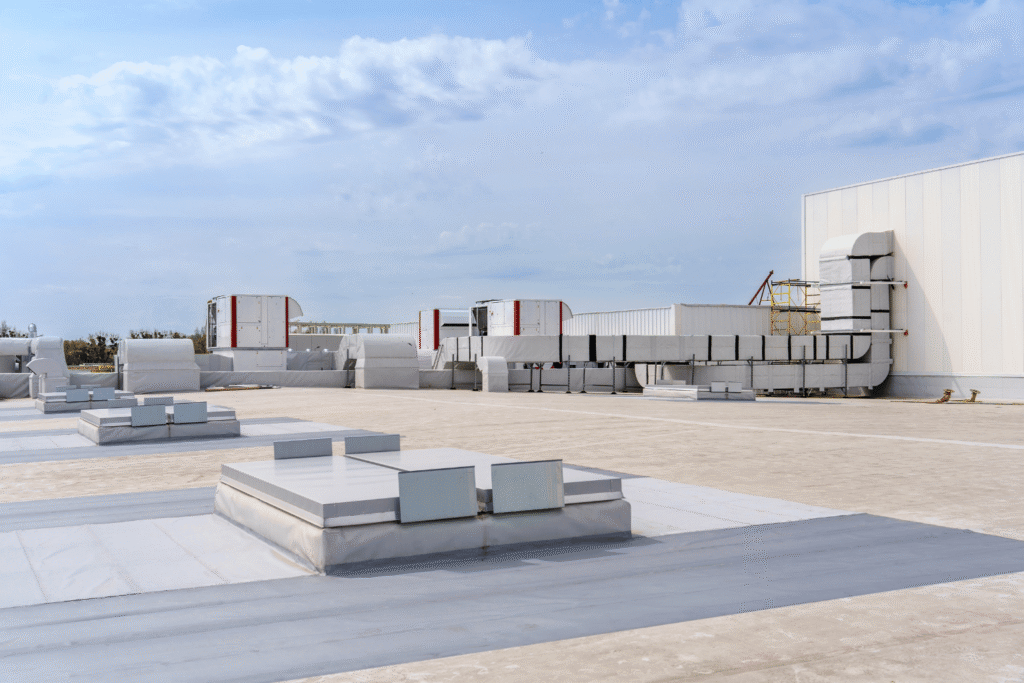
A properly specified flat roofing system in Orange, CA is made up of several layers, each with a job to do. The structural deck — usually metal, concrete, or wood — carries the load. Above it sits a layer of insulation, most commonly polyisocyanurate (polyiso) board, which provides thermal resistance and helps the building meet California’s energy code. A cover board frequently goes over the insulation to create a smooth, durable substrate. Finally, the waterproofing layer — a single-ply membrane, a built-up assembly, a sprayed foam, or a liquid-applied coating — forms the weather barrier that keeps water out. The performance of the whole system depends on how well these layers are matched to one another and to the building.
Because the surface is nearly level, flat roofing systems face a challenge that pitched roofs do not: water does not run off quickly, and standing water — known as ponding — is a routine reality. This is why the quality of the membrane, the strength of the seams, and the precision of the flashing details around every penetration matter enormously. A flat roof is essentially a large, continuous waterproof surface interrupted by dozens of vulnerable transitions — drains, HVAC curbs, pipe boots, skylights, and wall terminations — and it is at those transitions, not in the open field of the membrane, that the majority of leaks begin.
Flat Roofing Systems at a Glance: A layered, waterproof assembly for low-slope commercial roofs. Includes the deck, insulation, cover board, and a weatherproofing membrane or coating. Common systems in Orange, CA include TPO, PVC, EPDM, modified bitumen, spray polyurethane foam, and silicone or acrylic coatings. Most qualify for California Title 24 cool roof compliance when a reflective surface is specified. Typical service life ranges from 15 to 30+ years depending on the system and installation quality.
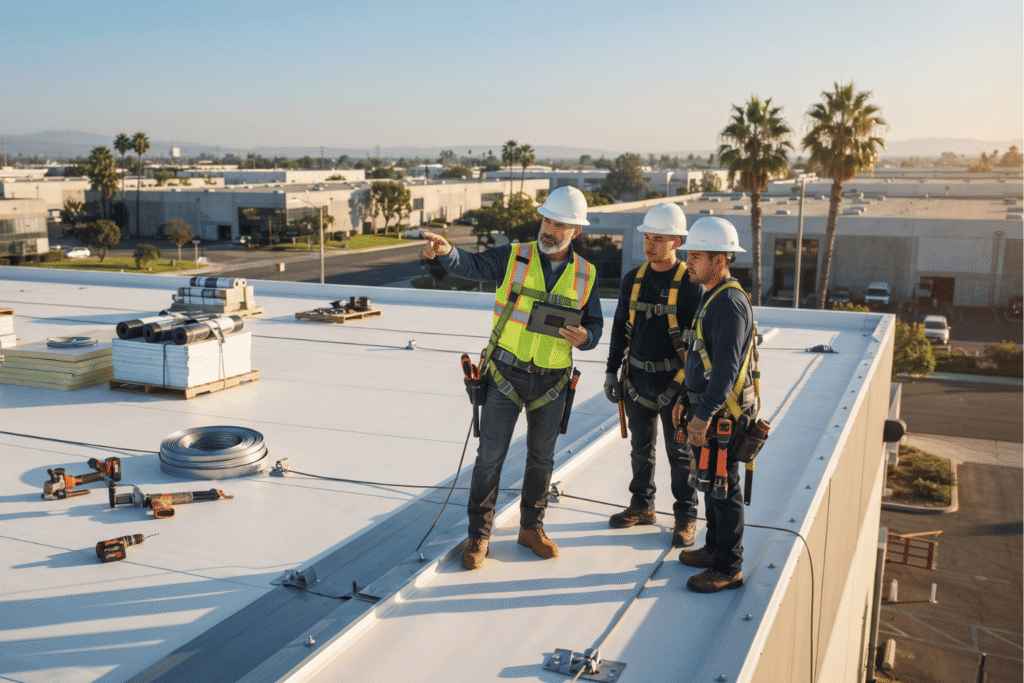
Why Flat Roofing Systems Perform Differently in Orange, California
Orange sits in the heart of Orange County, roughly ten miles inland from the coast, and its climate places a very specific set of demands on flat roofing systems. Understanding these local conditions is the difference between specifying a roof that lasts and one that fails early — and it is the reason a flat roofing system that performs well in a wet, cold climate may be the wrong choice for a building in Orange.
Intense, Prolonged UV Exposure
Orange County averages well over 250 sunny days per year, and that relentless ultraviolet exposure is the single biggest long-term threat to most flat roofing systems. UV radiation breaks down the chemical bonds in roofing membranes over time, causing brittleness, surface chalking, and cracking. This is why reflective, UV-stable systems — white single-ply membranes and reflective coatings in particular — dramatically outperform dark, absorptive materials over the life of the roof. A flat roofing system chosen for Orange needs to be built to reflect and resist the sun, not simply to endure it.
High Summer Heat and Daily Thermal Cycling
Inland Orange County routinely sees summer highs in the 90s, and rooftop surface temperatures on a dark membrane can climb well past 150°F. Just as significant is the daily temperature swing: a roof that bakes at midday and cools sharply overnight expands and contracts continuously. This thermal cycling is a primary cause of seam failure, flashing separation, and membrane fatigue. Flat roofing systems with strong, heat-welded seams and good flexibility across a wide temperature range hold up far better under Orange’s thermal stress than rigid or adhesive-seamed alternatives.
Santa Ana Winds and Uplift
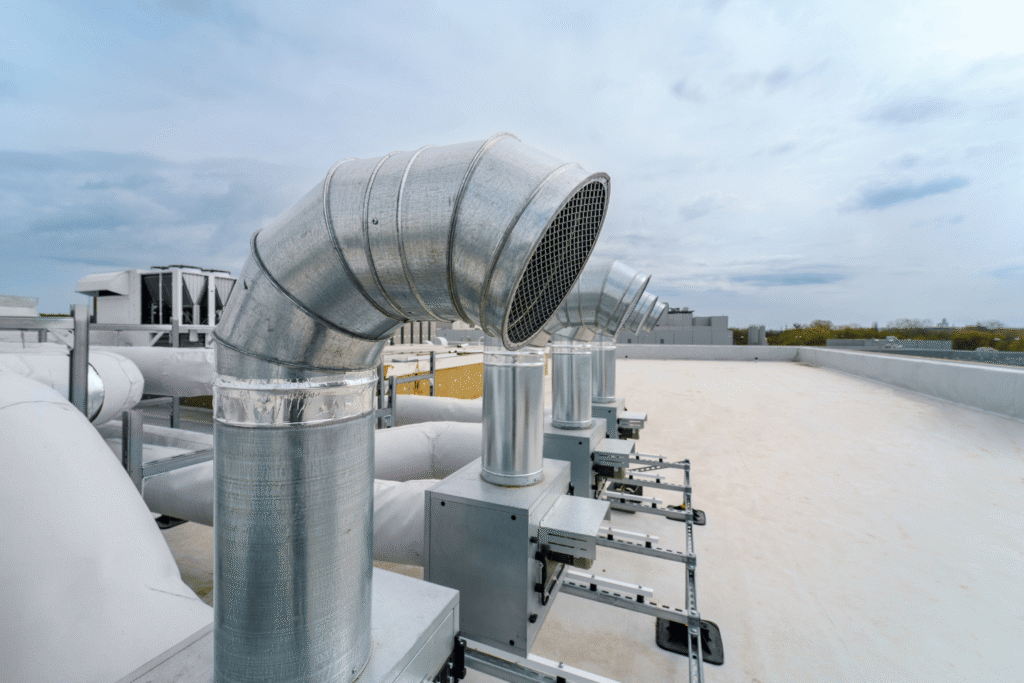
Orange County lies directly in the path of Santa Ana wind events, which generate sustained winds of 40–60 mph and gusts that can exceed 80 mph. On a flat roof, wind does not simply blow across the surface — it creates uplift pressure that tries to peel the membrane off the deck, with the greatest forces concentrated at corners and perimeters. This is why the attachment method of a flat roofing system, and the engineering behind its edge details, matters as much as the membrane itself. Applied Roofing Services designs to FM Global wind uplift standards on every eligible project.
Occasional Heavy Rain and Ponding Water
Orange’s climate is dry most of the year, but when storms arrive — often during El Niño cycles — they can deliver intense rainfall in a short window. Flat roofs with marginal drainage will pond, holding standing water for hours or days. The right flat roofing system tolerates ponding without degrading; the wrong one absorbs moisture, breaks down at the seams, or supports biological growth. Drainage design and ponding tolerance are core considerations in every flat roof we install in Orange.
The Major Types of Flat Roofing Systems Available in Orange
There is no single “best” flat roofing system — the right choice depends on your building, its use, your budget, and your long-term plans. Here are the major flat roofing systems Applied Roofing Services installs for commercial properties in Orange and throughout Orange County, along with the situations each one suits best.
TPO (Thermoplastic Polyolefin) Single-Ply
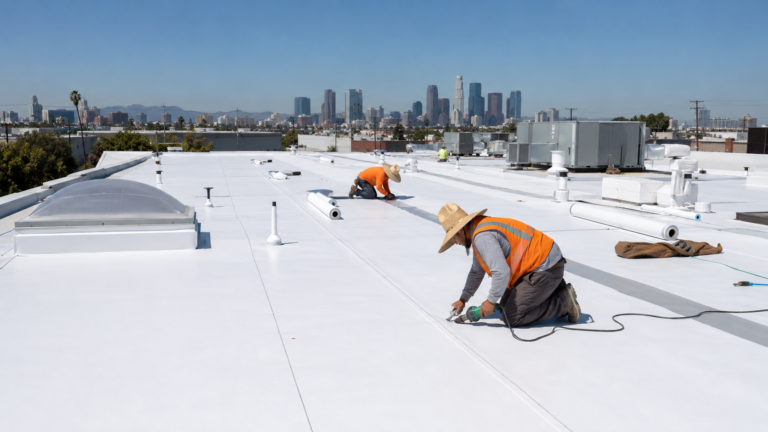
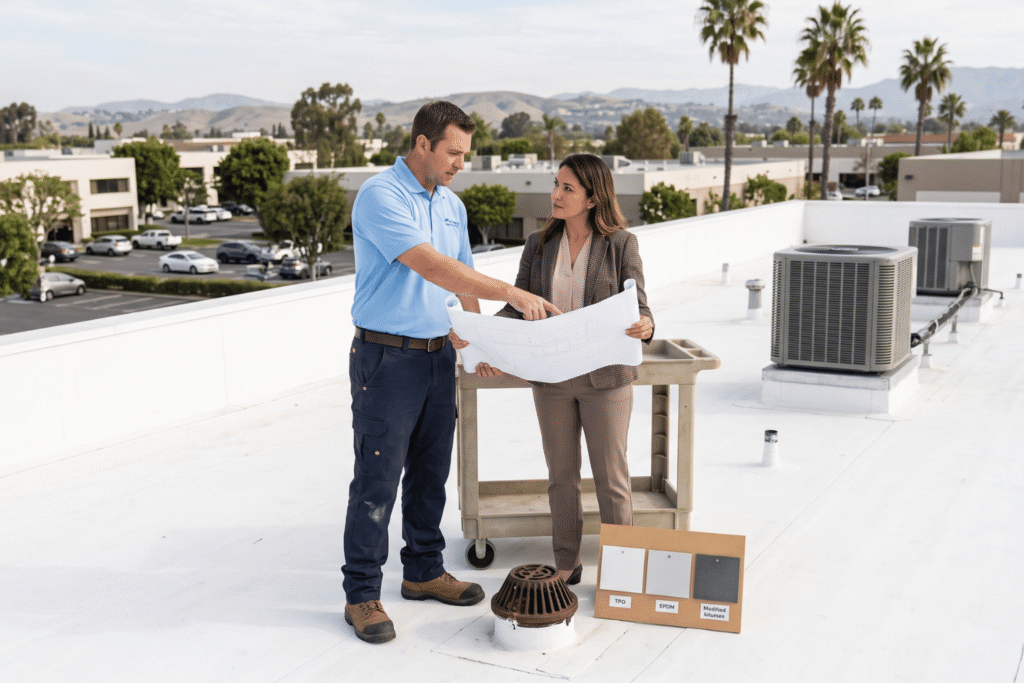
TPO is the most widely specified commercial flat roofing membrane in the United States, and for good reason. It is a white, single-ply thermoplastic membrane with hot-air-welded seams, excellent solar reflectance, and a strong balance of performance and cost. TPO’s reflective surface makes it a natural fit for Title 24 compliance in Orange, and its welded seams create a monolithic waterproof surface. For most warehouses, offices, and retail buildings, TPO delivers the best all-around value among flat roofing systems.
PVC (Polyvinyl Chloride) Single-Ply
PVC is a premium single-ply membrane that shares TPO’s reflectivity and welded-seam strength but adds superior chemical resistance. This makes PVC the system of choice for restaurants, food-processing facilities, and industrial buildings where the roof is exposed to grease, oils, or chemical exhaust — exposure that degrades other membranes. PVC costs more than TPO but earns its premium on the specific buildings that need it.
EPDM (Ethylene Propylene Diene Monomer) Single-Ply
EPDM is a durable synthetic rubber membrane that has been used on commercial flat roofs for decades. In its standard black form it is highly UV-resistant and cost-effective, but it absorbs heat rather than reflecting it, which makes standard EPDM a poor fit for Title 24 cool roof requirements unless a white version is specified at a premium. EPDM can be a sensible choice for shaded roofs or budget-driven projects, but in Orange’s sun-soaked climate it is usually not the first recommendation.
Modified Bitumen and Built-Up Roofing (BUR)
Modified bitumen and built-up roofing are the modern descendants of traditional “tar and gravel” roofs. These multi-ply, asphalt-based systems build up several reinforced layers into a thick, redundant waterproof assembly. They are rugged and time-tested, particularly for roofs with heavy foot traffic, and can be surfaced with reflective coatings or granules to improve energy performance. They remain a solid flat roofing system for certain applications, though single-ply membranes have taken over much of the market.
Spray Polyurethane Foam (SPF)
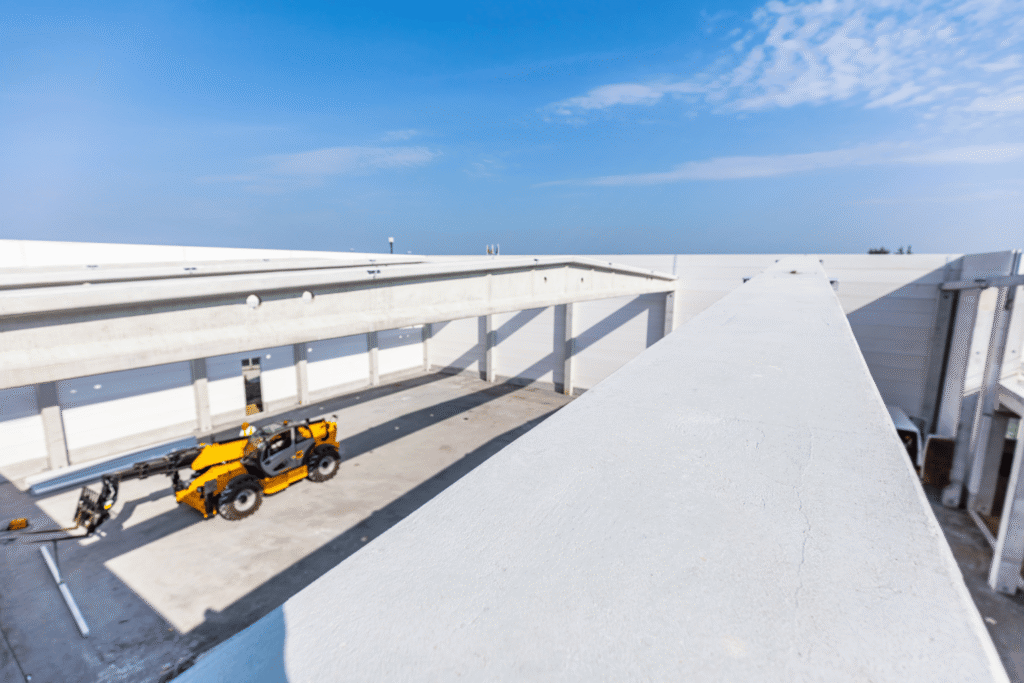
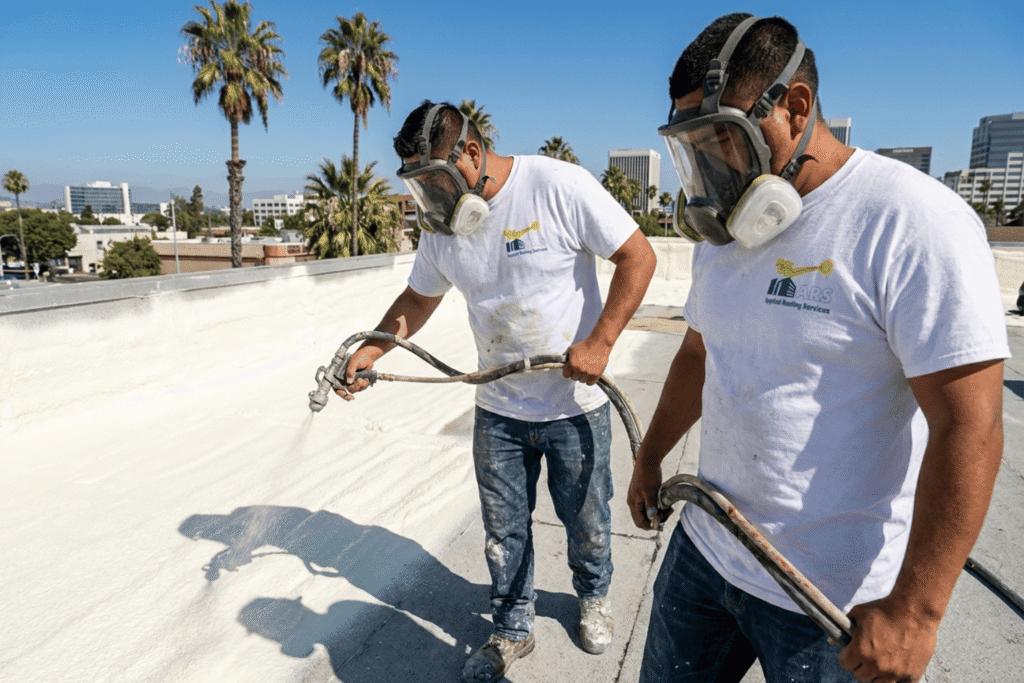
Spray polyurethane foam is a seamless flat roofing system applied as a liquid that expands into a rigid, fully adhered layer, then topped with a protective reflective coating. SPF is exceptional for roofs with complex shapes, many penetrations, or existing slope problems, because it self-flashes around obstacles and can be built up to correct drainage. It also adds significant insulation value. Applied Roofing Services has installed spray foam roofing across Southern California for over two decades.
Silicone and Acrylic Roof Coatings
Reflective roof coatings are liquid-applied flat roofing systems that renew and waterproof an existing roof without a full tear-off. Silicone coatings in particular excel in Orange’s climate: they are highly reflective, resist ponding water, and extend the service life of an aging membrane at a fraction of replacement cost. Coatings are a smart, budget-conscious option when the existing roof is structurally sound but weathering.
Comparing Flat Roofing Systems: Cost, Lifespan & Best Use
The table below compares the flat roofing systems most commonly installed on commercial buildings in Orange, CA. Use it as a starting point — the right system for your building depends on factors that only a proper assessment can determine, but understanding the trade-offs helps you ask better questions.
Flat Roofing System | Typical Lifespan | Title 24 Cool Roof | Best For |
TPO Single-Ply | 20–30 years | ✅ Yes (white) | Most commercial buildings; best all-around value |
PVC Single-Ply | 20–30 years | ✅ Yes (white) | Restaurants, food service, chemical/grease exposure |
EPDM Single-Ply | 15–25 years | ❌ Not standard (black) | Shaded roofs; lower-budget projects |
Modified Bitumen / BUR | 15–25 years | ⚠️ With reflective surfacing | High-traffic roofs; redundant waterproofing |
Spray Foam (SPF) | 20–30+ years (recoat) | ✅ Yes (coated) | Complex roofs, many penetrations, slope correction |
Silicone / Acrylic Coating | 10–20 years (renewable) | ✅ Yes | Restoring a sound but aging existing roof |
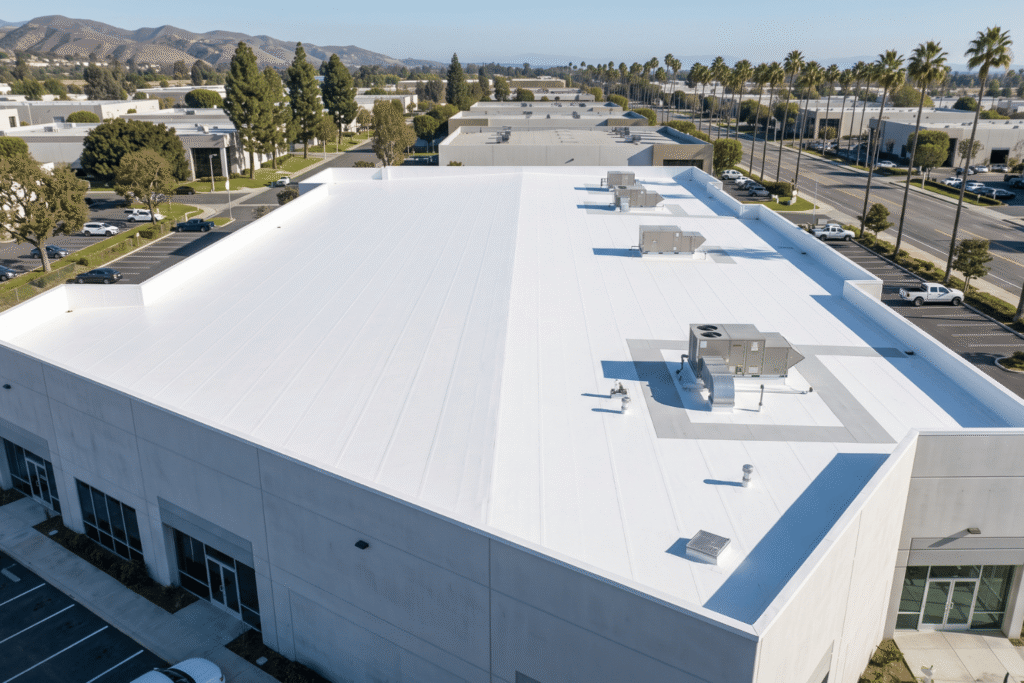
For the majority of commercial properties in Orange, a white single-ply system — TPO or PVC — offers the strongest combination of energy performance, seam integrity, durability, and value. Spray foam and coatings become compelling when the goal is to work with an existing roof rather than replace it. Applied Roofing Services will always recommend the flat roofing system that fits your building and your budget, not the one that carries the highest margin — and we will explain exactly why.
Flat Roofing Systems and California Title 24: What Compliance Means in Orange
California operates the most demanding commercial building energy code in the country, and for flat roofs the relevant framework is Title 24 Part 6 — the California Building Energy Efficiency Standards. For property owners in Orange, Title 24 is not optional guidance; it is enforced code that shapes which flat roofing systems you can legally install on a new or replacement roof.
Cool Roof Requirements for Low-Slope Commercial Roofs
For low-slope commercial roofs, Title 24 requires that the roofing surface meet minimum thresholds for solar reflectance and thermal emittance, as certified by the Cool Roof Rating Council (CRRC). In practical terms, this means the roof must reflect a large share of incoming sunlight rather than absorbing it as heat. White single-ply membranes and reflective-coated systems exceed these thresholds inherently, which is why they dominate flat roofing installations in Orange. Dark systems can still be used in certain applications but generally require compensating energy measures elsewhere in the building.
Compliance is verified at inspection. A flat roofing system that fails to meet cool roof requirements can result in a failed building inspection, required rework at the owner’s expense, and delays in occupancy for new construction. Applied Roofing Services handles Title 24 documentation, CRRC product verification, and inspection coordination as a standard part of every commercial flat roof we install in Orange.
ENERGY STAR Certification and Reflective Performance
The ENERGY STAR Roof Products program independently certifies roofing products that meet minimum reflectance thresholds. Specifying an ENERGY STAR-rated flat roofing system supports utility rebate applications, contributes toward LEED credits, and provides third-party verification of the performance claims a contractor makes. The flat roofing systems Applied Roofing Services installs carry current ENERGY STAR and CRRC certifications.
Utility Rebates for Cool Flat Roofs
Qualifying cool roof installations on commercial buildings in Orange County may be eligible for rebates through Southern California Edison’s Business Energy Solutions program. Rebate availability depends on the current program cycle and the specific installation scope. Our team can help you identify applicable incentives before your project begins so they can be built into your budget.
Installation and Attachment Methods for Flat Roofing Systems
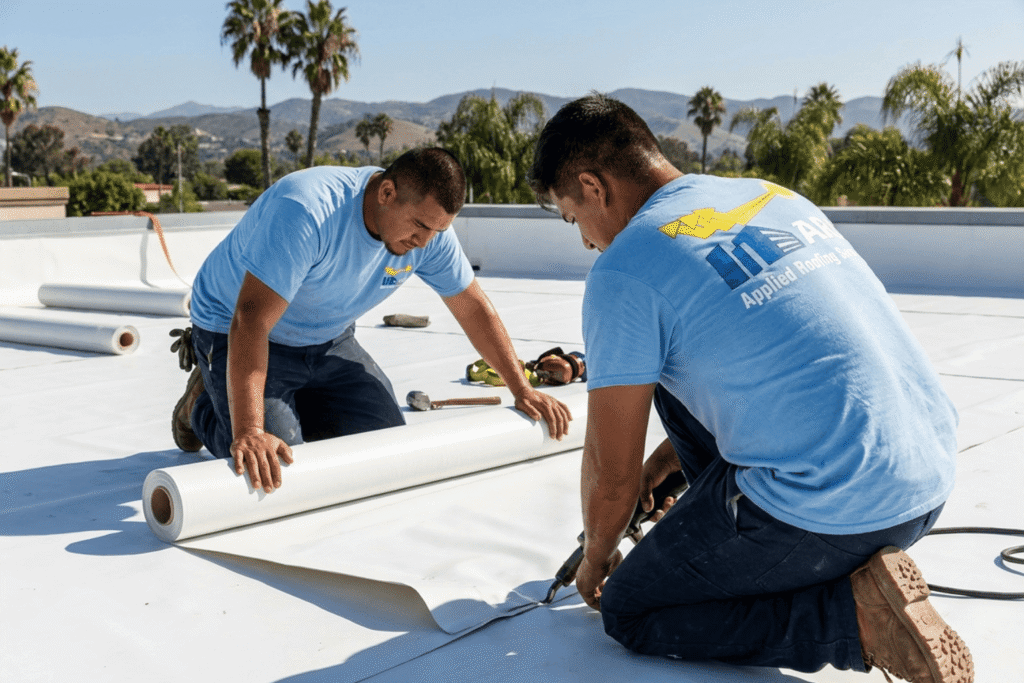
How a flat roofing system is attached to the building matters as much as which membrane is chosen — particularly in Orange County, where Santa Ana winds create serious uplift forces. Single-ply flat roofing systems can be installed using three primary attachment methods, and Applied Roofing Services evaluates all three for every project.
1
Fully Adhered
In a fully adhered installation, the membrane is bonded across its entire underside to the insulation or cover board using a compatible adhesive. This creates uniform attachment with no billowing, the highest wind-uplift resistance, and the cleanest appearance. Fully adhered flat roofing systems are generally preferred for buildings in Orange’s higher wind-exposure zones and where rooftop aesthetics matter, though they carry a higher installation cost due to the added labor and adhesive.
2
Mechanically Fastened
Mechanically fastened systems secure the membrane to the structural deck with rows of fastener plates installed beneath the seams. This method installs faster and costs less than fully adhered systems while delivering excellent wind performance for most Orange County locations. It is the most commonly specified method for warehouse, industrial, and retail flat roofs, and it suits the majority of commercial buildings in the area.
3
Ballasted
Ballasted systems hold the membrane down with the weight of river gravel or concrete pavers, with minimal mechanical attachment. This is the fastest, lowest-cost method and avoids fastener penetrations entirely, but it adds significant dead load to the structure and is generally not recommended in high-wind areas. Applied Roofing Services confirms structural capacity and wind exposure before recommending ballasted installation on any flat roof.
What Do Flat Roofing Systems Cost in Orange, CA?
Pricing transparency matters, so here is a realistic breakdown of what commercial flat roofing systems cost in Orange and the surrounding area, based on current material and labor conditions in the Orange County market. These are installed costs including materials, labor, flashing, and standard cleanup.
Flat Roofing System / Scope | Typical Cost Range (per sq. ft.) | Key Cost Variables |
TPO single-ply (installed) | $5.00 – $9.00 | Attachment method, insulation, penetration count |
PVC single-ply (installed) | $6.00 – $11.00 | Membrane thickness, detailing, chemical-resistant needs |
Spray polyurethane foam (SPF) | $5.50 – $10.00 | Foam thickness, coating type, slope correction |
Silicone / acrylic coating (restoration) | $2.50 – $5.50 | Existing roof condition, coating mils, prep work |
Full replacement (tear-off + new system) | $7.50 – $13.00 | Layers removed, disposal, deck repairs, access |
These ranges do not include structural repairs, drain modifications, or HVAC curb work, which are priced separately when needed and always communicated to you before work begins. Several factors move a project within these ranges:
- Roof size: Larger flat roofs benefit from material and mobilization economies. A 50,000 sq. ft. project costs meaningfully less per square foot than a 5,000 sq. ft. one.
- Roof access and height: High or difficult-to-reach roofs require additional equipment and safety measures that add cost.
- Number of penetrations: Every HVAC unit, pipe boot, drain, and curb requires individual flashing work. A busy rooftop takes more labor than a clean, open deck.
- Insulation upgrades: Title 24’s minimum R-value requirements mean older buildings may need insulation added during the project — a cost that pays back in lower energy bills.
- Membrane thickness: Heavier membranes cost more but resist punctures better and last longer. We typically recommend a minimum of 60-mil for single-ply commercial flat roofs.
Warranty Matters: Applied Roofing Services installs flat roofing systems from industry-leading manufacturers and can provide manufacturer-backed warranties of up to 20 years on qualifying installations. A contractor offering a dramatically lower price is almost certainly using thinner membrane, off-brand products with no manufacturer warranty support, or cutting corners on seam and flashing quality. Always ask what warranty comes with the system — not just the material.
Repair, Re-Cover, or Replace? Choosing the Right Path for Your Flat Roof
Not every aging flat roof needs to be torn off and replaced. One of the most valuable things a knowledgeable contractor brings to the table is an honest assessment of whether your existing flat roofing system can be repaired, restored with a coating, re-covered, or genuinely needs full replacement. Choosing the wrong path in either direction is expensive.
When Repair Makes Sense
If your flat roof is generally sound but has isolated problems — a punctured area, a few failing seams, a leaking drain, or lifting flashing at one edge — targeted repair is usually the right call. Small issues caught early are fast and inexpensive to fix, and addressing them promptly prevents the interior damage that turns a minor repair into a major event.
When Restoration or Re-Cover Makes Sense
When a flat roofing system is weathering broadly but the substrate underneath is still dry and structurally sound, a silicone coating or a single-ply re-cover can add 10–20 years of service life without the cost, disruption, and landfill impact of a full tear-off. California building code generally allows a re-cover only when there is a single existing roof layer in place, so we always verify layer count and moisture conditions before recommending this path.
When Full Replacement Is the Right Investment
If moisture has saturated the insulation, if the roof already carries multiple layers, or if the system has reached the end of its serviceable life, full replacement is the sound long-term decision. A new flat roofing system installed correctly resets the clock with decades of leak-free performance and a fresh manufacturer warranty. Applied Roofing Services always evaluates the less-invasive options first and only recommends replacement when it genuinely serves your interests.
The Applied Roofing Services Flat Roof Installation Process
A flat roofing system is only as good as the installation that puts it in place. The membrane is largely a commodity — the expertise lies in the preparation, detailing, seam quality, and warranty backing a skilled contractor provides. Here is what our process looks like from first contact to final sign-off.
Step 1: Free Roof Assessment & Scope Development
We begin with a thorough inspection of your existing roof — evaluating the substrate, insulation, drainage, and every penetration detail. We identify anything that must be addressed before new material goes down, document it clearly, and develop a detailed scope. You receive a written estimate that accounts for every element of the project, with no surprises once work begins.
Step 2: Substrate Preparation
Proper preparation is the foundation of a long-performing flat roofing system. We address substrate irregularities, repair or replace wet insulation, confirm drains are clear and correctly sloped, and verify that curbs and edge details are sound before installation begins. Cutting corners here is exactly where lesser contractors create the conditions for premature failure.
Step 3: Insulation & Cover Board Installation
Where required, we install the appropriate R-value polyiso insulation to meet Title 24 and a cover board to create a smooth, stable substrate for the new membrane. This layer protects the insulation from foot traffic and gives single-ply and adhered systems the clean surface they need to perform.
Step 4: System Installation & Seam Welding
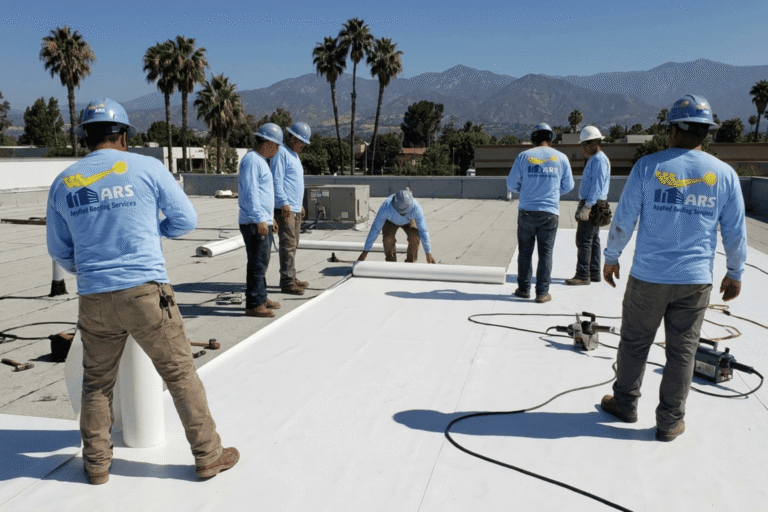
The flat roofing system is installed using the specified method — adhered, fastened, ballasted, sprayed, or coated. On single-ply systems, seams are hot-air welded with calibrated automatic welders and hand welders at complex details, then probe-tested along every linear foot to verify continuous fusion. That seam probing is a quality-control step that separates professional commercial work from low-bid installations.
Step 5: Flashing, Edge & Penetration Detailing
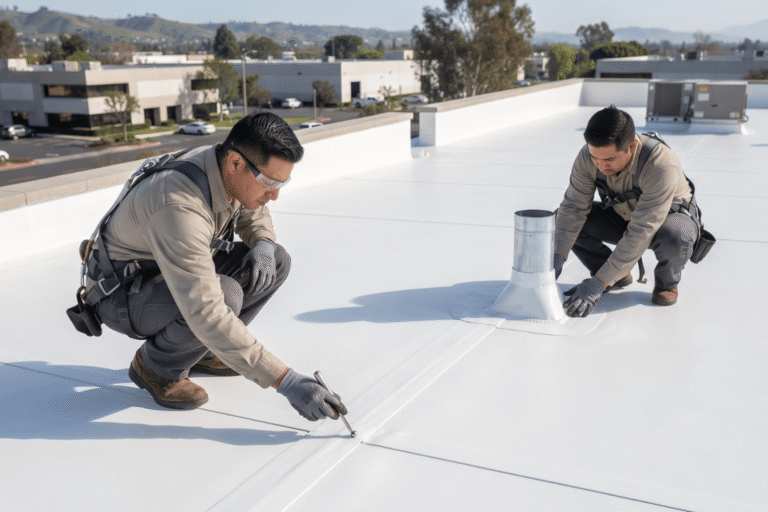
Flashing is where most roof failures begin. Every penetration — HVAC curbs, pipe boots, drains, skylights, wall terminations, and edges — receives individual attention with manufacturer-specified materials and detailing. We treat flashing as the most critical phase of every installation, because a flawless field membrane with one compromised detail is still a leaking roof.
Step 6: Final Inspection & Documentation
Before we leave, we conduct a comprehensive final inspection — verifying seam continuity, flashing integrity, drain function, and edge security. We provide written documentation of the completed work, material specifications, and warranty registration, along with any Title 24 compliance certifications your permit file requires.
Maintaining Your Flat Roofing System to Protect a 20-Year Investment
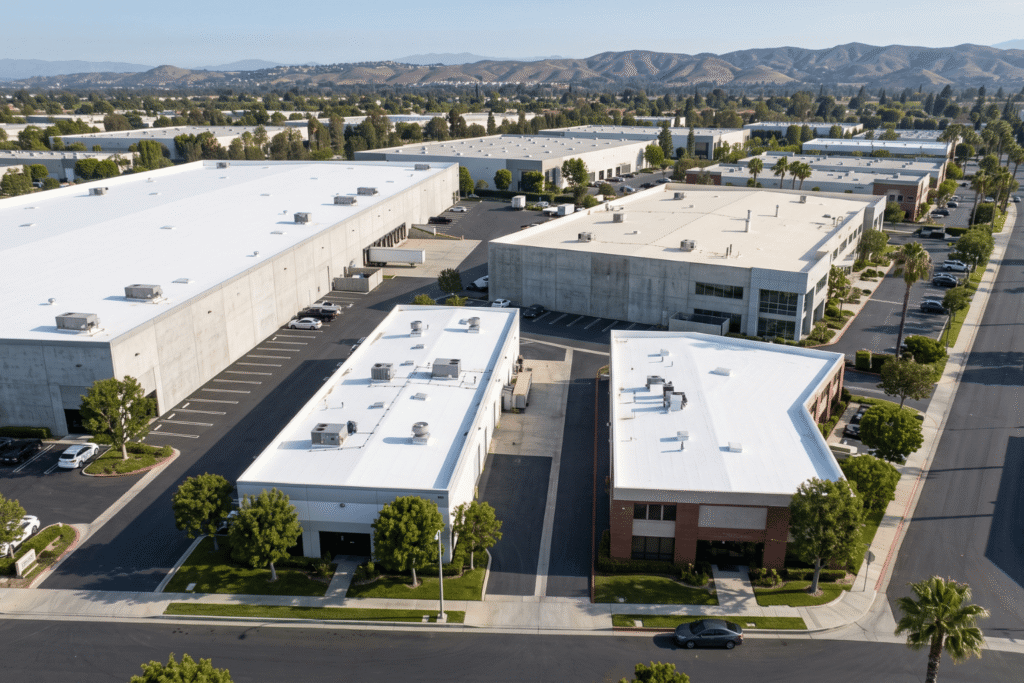
A properly installed flat roofing system is among the lowest-maintenance roofs available, but “low maintenance” is not “no maintenance.” A basic maintenance program extends service life, preserves manufacturer warranty coverage, and keeps small issues from becoming major ones.
Recommended Maintenance Practices
- Biannual inspections: Professional inspections twice a year — ideally in fall before the rains and in spring — catch developing problems early: opening seams, lifting flashing, drain blockages, or membrane punctures from foot traffic and debris.
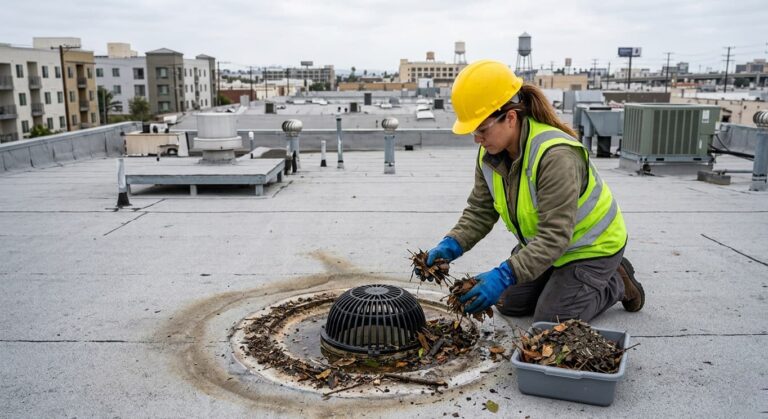
- Drain maintenance: Keep drains and scuppers clear so ponding does not accumulate beyond design intent. Standing water adds structural load and can damage edge flashings if it backs up.
- Foot-traffic protection: Route any regular rooftop traffic to HVAC equipment along designated walkpads to protect the membrane from concentrated point loads and incidental sharp contact.
- Prompt repairs: A patch over a puncture or a re-weld of a separating seam is fast and inexpensive when caught early — and far cheaper than the interior damage a neglected issue eventually causes.
Applied Roofing Services offers commercial roof maintenance programs for every flat roofing system we install. A maintenance agreement keeps your roof inspected on schedule, gives you priority response for any issues, and preserves the conditions your manufacturer warranty requires.
Why Commercial Property Owners in Orange Choose Applied Roofing Services
There are plenty of contractors in Orange County who will quote you a price on a flat roof. Here is what separates Applied Roofing Services from the field.
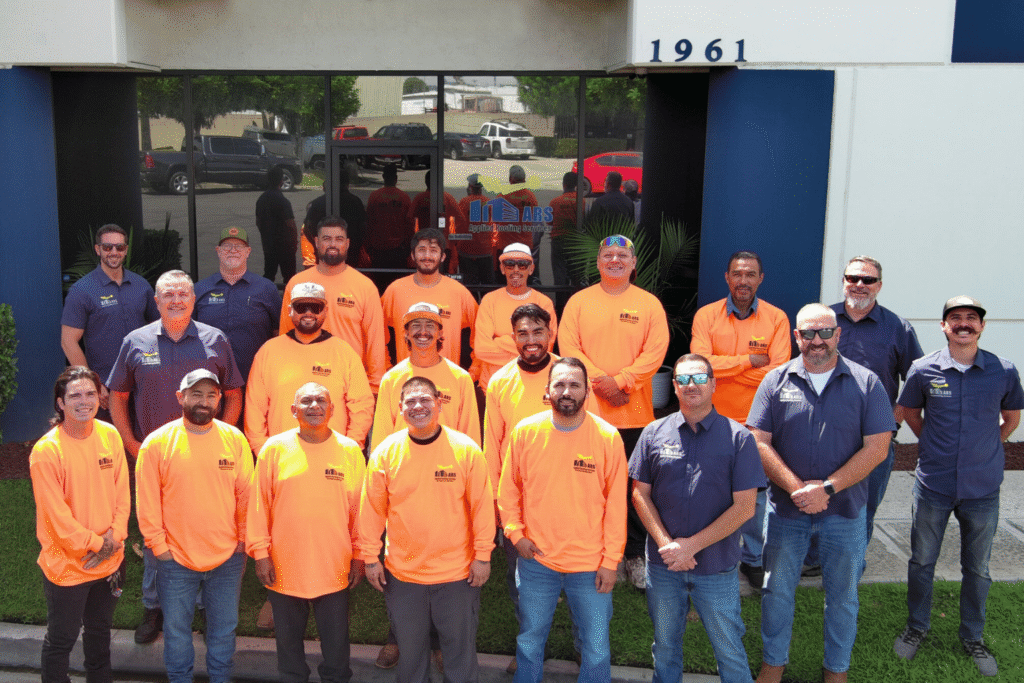
Two Decades of Local Experience — and a Local Office
Applied Roofing Services has operated in the Southern California commercial roofing market since 2003, and our Orange County office sits right in the City of Orange. That local presence matters: we have installed flat roofing systems through multiple El Niño cycles and Santa Ana wind seasons, and our roofs have been tested by real Orange County weather. Contractors who have been around a few years simply have not had time to prove their work holds up.
Licensed, Insured & CRRC-Certified
Applied Roofing Services is a fully licensed California roofing contractor carrying full general liability and workers’ compensation insurance on every project. The flat roofing systems we install use products certified by the Cool Roof Rating Council, so the reflectance values we represent to you and your building inspector are independently verified — not self-reported marketing claims.
Industry-Leading Manufacturer Warranties
We install flat roofing systems from the industry’s most established manufacturers and can offer manufacturer-backed warranties of up to 20 years on qualifying projects — covering both material and installation workmanship. Low-bid contractors using off-brand or gray-market products cannot offer this protection.
No-Surprise Pricing
We provide itemized written estimates before any work begins, and the price we quote is the price you pay — subject only to scope changes we communicate and agree with you in writing first. Property managers who have been burned by change-order-heavy contractors consistently tell us this is one of the things they value most.
“ARS has been my only foam roofing contractor for nearly 15 years. Their service is excellent and price competitive. I would recommend them highly.”
“Jeff and Jim Cardenas have always been responsive and easy to work with, have done what they said they would do, and gotten the job done within a reasonable amount of time.”
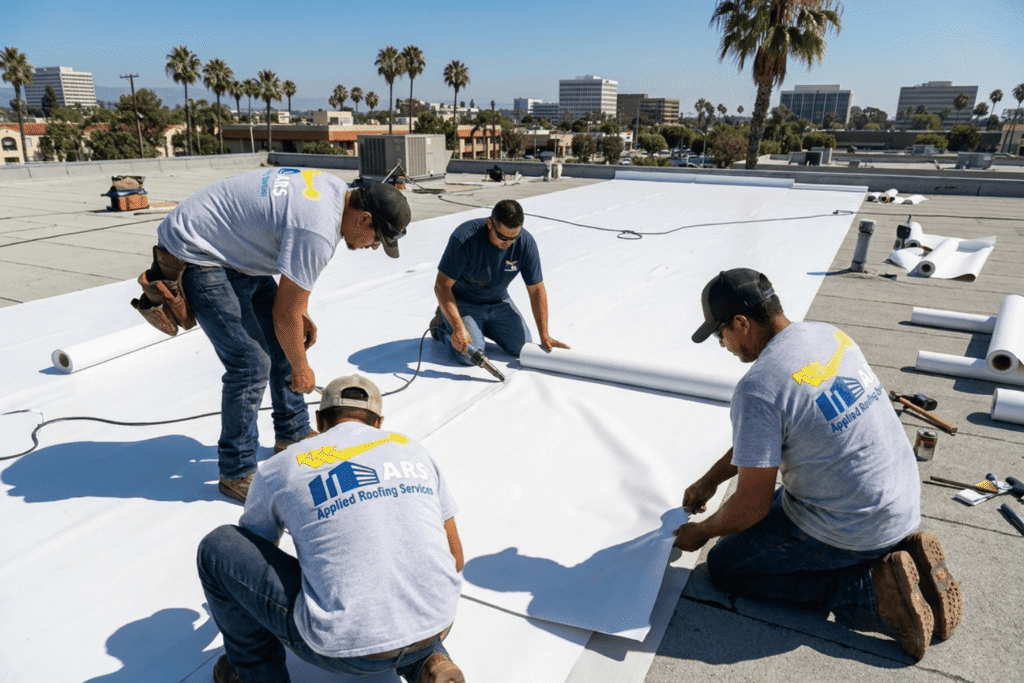
Flat Roofing System Service Areas: Orange, Orange County & Beyond
Applied Roofing Services installs flat roofing systems for commercial properties throughout Orange County and Southern California, working from three office locations to combine regional reach with local responsiveness:
- Orange County (home base): Orange, Anaheim, Santa Ana, Fullerton, Irvine, Costa Mesa, Huntington Beach, Garden Grove, Yorba Linda, Brea, Placentia, Tustin, Buena Park, Westminster, La Habra, Cypress
- Los Angeles County: Los Angeles (DTLA, Hollywood, Mid-Wilshire, Koreatown, Van Nuys, El Segundo), Burbank, Glendale, Long Beach, Torrance, Carson, Compton, El Monte, Pasadena, Pomona, West Covina, Inglewood, Hawthorne
- Inland Empire: Rancho Cucamonga, Ontario, Fontana, Rialto, San Bernardino, Chino, Upland, Redlands, Colton
Get Your Free Flat Roofing System Estimate Today Orange, CA: (714) 632-8418 — Los Angeles: (213) 255-3677 — Inland Empire: (909) 361-6119. Or submit your project details online at appliedroofingservices.com.
Get Your Free Roofing Estimate Today
Los Angeles: (213) 255-3677
Inland Empire: (909) 361-6119
Or submit your project details online.

Frequently Asked Questions: Flat Roofing Systems in Orange
What is the best flat roofing system for a commercial building in Orange, CA?
For most commercial buildings in Orange, a white single-ply system — TPO or PVC — offers the best combination of energy performance, seam strength, durability, and value, and both meet California’s Title 24 cool roof requirements. PVC is the better choice when the roof is exposed to grease or chemicals, such as at restaurants and food-processing facilities. Spray foam and reflective coatings become attractive when the goal is to restore an existing roof rather than replace it. The right answer depends on your building, which is why we assess every roof before recommending a system.
How long do flat roofing systems last in Southern California?
A properly installed single-ply flat roofing system using 60-mil or heavier membrane typically delivers 20–30 years of service in Orange County’s climate. Spray foam roofs can last just as long with periodic recoating, while coatings add 10–20 renewable years to an existing roof. Actual lifespan depends heavily on membrane thickness, installation quality, flashing detail, and ongoing maintenance. Applied Roofing Services installs to standards that consistently reach the high end of the expected range.
Are flat roofing systems required to meet California Title 24?
Title 24 does not mandate a specific system, but it does require that low-slope commercial roofs meet minimum solar reflectance and thermal emittance standards — the cool roof requirement. White single-ply membranes and reflective-coated systems meet these thresholds inherently, which is why they dominate flat roofing in Orange. Darker systems can be used in some cases but usually require compensating energy measures elsewhere in the building.
Can a new flat roofing system be installed over my existing roof?
Often, yes. A re-cover or a silicone restoration can be installed over an existing flat roof without a full tear-off, provided there is no more than one existing layer (as California code generally requires), the substrate is structurally sound, and moisture testing confirms the insulation is dry. Re-covers and coatings eliminate tear-off and disposal costs, shorten the project, and reduce landfill impact. We always evaluate these options before recommending full replacement.
How much does a flat roofing system cost in Orange?
Installed costs in the Orange County market generally run from about $5.00–$9.00 per square foot for TPO, $6.00–$11.00 for PVC, $5.50–$10.00 for spray foam, and $2.50–$5.50 for a silicone restoration, with full tear-off-and-replace projects reaching $7.50–$13.00. Your price depends on roof size, access, penetration count, insulation upgrades, and membrane thickness. We provide an itemized written estimate so you know exactly what your project includes.
What causes flat roofs to leak, and how are leaks prevented?
The large majority of flat roof leaks begin not in the open field of the membrane but at transitions — seams, flashing, drains, and penetrations. Prevention comes down to strong, properly welded seams and meticulous flashing detail at every curb, pipe, and edge, backed by regular maintenance to catch small issues early. This is exactly why installation quality matters more than the membrane brand, and why we probe-test every seam and treat flashing as the most critical phase of the job.
Do flat roofing systems qualify for utility rebates in Orange County?
Qualifying cool roof installations on commercial properties in Orange County may be eligible for rebates through Southern California Edison’s energy efficiency programs. Availability depends on the current program cycle, your utility account type, and the installation scope. We can help you identify applicable incentives before your project begins so they can be factored into your budget.
How do I know whether to repair, restore, or replace my flat roof?
Isolated problems on an otherwise sound roof usually call for targeted repair. Broad weathering over a still-dry, structurally sound substrate is often best addressed with a coating or re-cover that adds years of life without a tear-off. Saturated insulation, multiple existing layers, or a roof at the end of its service life point to full replacement. An honest assessment is the only way to know for certain, and Applied Roofing Services always evaluates the least-invasive option first.
Applied Roofing Services is a licensed California commercial roofing contractor serving Orange County, Los Angeles County, and the Inland Empire since 2003. Our flat roofing systems are certified by the Cool Roof Rating Council (CRRC) and meet ENERGY STAR and California Title 24 Part 6 energy efficiency requirements. License information available upon request. All work performed in compliance with California building code and OSHA safety standards.